
Happiness & Success
Achieving Happiness Through Acceptance of Life
The quest for happiness often leads to frustration, as many fail to realize that the...








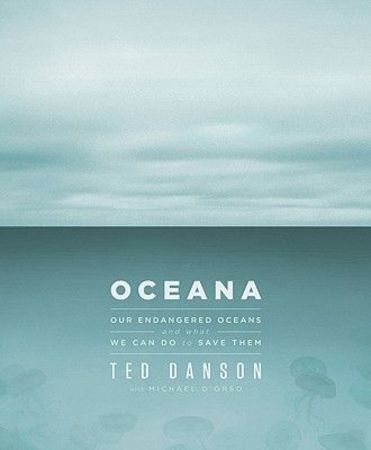
Our relationship with the ocean stands at a critical crossroads. For too long, humanity has treated the vast blue waters covering most of our planet as both an inexhaustible resource and an infinite dumping ground. This powerful exploration of marine conservation challenges us to fundamentally rethink our connection to the seas and recognize that the health of our oceans directly determines the future of life on Earth.
Readers embarking on this journey will discover eye-opening truths about the current state of our marine ecosystems. The statistics are sobering: overfishing has decimated fish populations worldwide, plastic pollution has created massive garbage gyres in the middle of our oceans, and industrial runoff continues to create dead zones where nothing can survive. Yet this isn't simply a catalog of environmental disasters. Instead, it offers a deeply personal perspective on ocean advocacy, blending scientific facts with compelling narratives that make the crisis feel immediate and solvable.
What makes this work particularly transformative is its emphasis on individual empowerment. Rather than leaving readers feeling helpless in the face of such massive environmental challenges, the narrative demonstrates how personal choices ripple outward to create meaningful change. From the seafood we select at restaurants to the products we purchase at grocery stores, every decision either contributes to ocean degradation or helps restore marine health. This consciousness-raising approach aligns perfectly with the understanding that personal transformation and planetary healing are intimately connected.
Read more ▼
Susan Freinkel

Colin M. Turnbull, Colin Turnbull, Collin Turnbull, Colin M. Turnbull, Turnbull, Colin M, Colin M Turnbull, Colin M. TURNBULL, Colin M. Turnbull.

Niles Elliot Goldstein

Gregory Smith, Craig Henderson
The quest for happiness often leads to frustration, as many fail to realize that the...

Reaching sixty can evoke complex emotions, blending relief with ongoing ambition. This...

The quest for life's purpose often leads to unsatisfactory answers. This article...

Romantic love is a complex emotion shaped by historical, cultural, and biological...

Imagine going through one of the most physically and emotionally demanding experiences...

Have you ever argued over something that wasn't actually said? From cultural differences...

Daily actions often conflict with personal beliefs due to past experiences. By utilizing...

Therapists often use dream interpretation to delve into patients' emotions, but true...