
Happiness & Success
Achieving Happiness Through Acceptance of Life
The quest for happiness often leads to frustration, as many fail to realize that the...








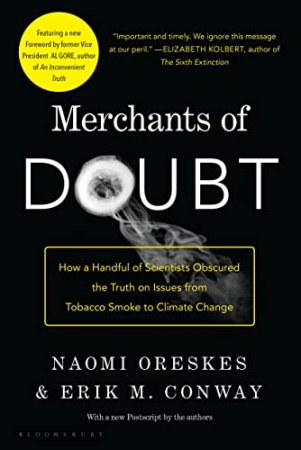
Discover how scientific consensus can be deliberately undermined and why understanding this manipulation is essential to reclaiming personal power in an age of information overload. This groundbreaking work reveals the systematic campaigns that have been waged to create confusion about established scientific facts, from tobacco's health risks to climate change, and exposes the small group of influential scientists who have played central roles in sowing seeds of doubt across multiple critical issues affecting public health and planetary wellbeing.
At the heart of this investigation lies a profound exploration of how a handful of physicists, many with impressive credentials from Cold War weapons programs, leveraged their scientific authority to cast doubt on research they disagreed with ideologically. These individuals didn't conduct primary research in the fields they challenged—whether tobacco science, acid rain, the ozone hole, or global warming. Instead, they mastered the art of creating the appearance of debate where scientific consensus actually existed, employing strategic communication tactics that would confuse the public and delay policy action for decades.
For readers committed to personal empowerment and conscious living, understanding these manufactured controversies provides essential tools for navigating today's complex information landscape. The examination demonstrates how corporate interests and ideological commitments can hijack scientific discourse, creating false equivalencies that paralyze public understanding and action. By tracing the evolution of doubt-mongering tactics from the tobacco industry's playbook through subsequent environmental and health debates, a clear pattern emerges that illuminates how citizens have been systematically disempowered from making informed decisions about their health, their families, and their planet.
Read more ▼
Mary Oliver

Hilary T. Smith

Bram Stoker

Masha Malka
The quest for happiness often leads to frustration, as many fail to realize that the...

Reaching sixty can evoke complex emotions, blending relief with ongoing ambition. This...

The quest for life's purpose often leads to unsatisfactory answers. This article...

Romantic love is a complex emotion shaped by historical, cultural, and biological...

Imagine going through one of the most physically and emotionally demanding experiences...

Daily actions often conflict with personal beliefs due to past experiences. By utilizing...

Have you ever argued over something that wasn't actually said? From cultural differences...

Therapists often use dream interpretation to delve into patients' emotions, but true...