

Happiness & Success
Achieving Happiness Through Acceptance of Life
The quest for happiness often leads to frustration, as many fail to realize that the...








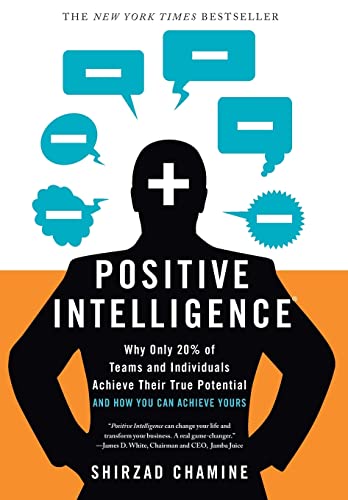
Imagine possessing a measure of your mental fitness, similar to how you track physical fitness, that could predict your capacity for happiness and success. This groundbreaking work introduces a revolutionary framework for understanding and enhancing the mind's capability to work for you rather than against you. Drawing from neuroscience, organizational science, and psychology, combined with research involving hundreds of CEOs and their teams, this approach reveals how much of our mental energy is sabotaged by hidden internal enemies.
The core premise centers on the concept that every one of us has invisible saboteurs living in our minds, automated patterns of thinking developed early in life that once served protective purposes but now generate most of our stress, anxiety, unhappiness, and self-limiting behaviors. These saboteurs masquerade as helpful voices, but they systematically undermine our wellbeing and performance. Through compelling research and practical examples, readers discover the nine common saboteurs that plague humanity, from the Judge that constantly finds fault to the Controller that must manage everything, from the Avoider that seeks pleasure over confrontation to the Victim that seeks attention through suffering.
Central to this transformative framework is understanding that mental fitness can be strengthened just like physical fitness. The distinction between a mind that works against you and one that works for you determines whether you experience most situations with positive or negative emotions. Mental fitness is measured through a Positive Intelligence Quotient, which represents the percentage of time your mind acts as your friend versus your foe. Research cited demonstrates that higher scores correlate strongly with performance in sales, management effectiveness, productivity, resilience, health, and relationships.
Read more ▼
Sylvia Browne, Lindsay Harrison

Gerald G Jampolsky

Tina Welling
The quest for happiness often leads to frustration, as many fail to realize that the...

Reaching sixty can evoke complex emotions, blending relief with ongoing ambition. This...

The quest for life's purpose often leads to unsatisfactory answers. This article...

Romantic love is a complex emotion shaped by historical, cultural, and biological...

Imagine going through one of the most physically and emotionally demanding experiences...

Daily actions often conflict with personal beliefs due to past experiences. By utilizing...

Have you ever argued over something that wasn't actually said? From cultural differences...

Therapists often use dream interpretation to delve into patients' emotions, but true...