
Happiness & Success
Achieving Happiness Through Acceptance of Life
The quest for happiness often leads to frustration, as many fail to realize that the...








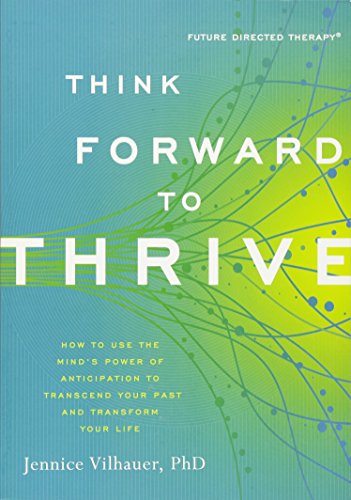
Imagine standing at a crossroads where your past experiences no longer dictate your future possibilities. This transformative approach to mental health and personal development introduces a revolutionary perspective on how we can reshape our lives by fundamentally changing the direction of our thoughts. Rather than dwelling on past traumas, regrets, or disappointments, this methodology teaches us to harness the power of forward-thinking to create the future we desire.
At its core, this work challenges one of the most pervasive assumptions in modern psychology: that understanding and processing our past is the primary key to healing and growth. While traditional therapeutic approaches often focus extensively on excavating childhood wounds and analyzing historical patterns, this fresh perspective suggests that our ability to envision and actively create our future holds far greater transformative power. The distinction is profound and potentially life-changing for anyone who has felt stuck in cycles of rumination or trapped by their personal history.
The fundamental premise rests on a scientifically-grounded understanding of how the human brain processes time and possibility. Our minds possess a remarkable capacity called prospection—the ability to imagine future scenarios and pre-experience outcomes before they occur. This isn't mere daydreaming or wishful thinking; it's a cognitive function that has been essential to human survival and advancement throughout history. By learning to deliberately harness this innate capability, individuals can literally rewire their neural pathways to support new behaviors, beliefs, and outcomes.
Read more ▼
Tom Voss, Rebecca Anne Nguyen
Susan J. Jeffers

Corinne McLaughlin
Thriving -- Upgrading the Software of Your Mind
Will Wilkinson, Christopher Harding
The quest for happiness often leads to frustration, as many fail to realize that the...

Reaching sixty can evoke complex emotions, blending relief with ongoing ambition. This...

The quest for life's purpose often leads to unsatisfactory answers. This article...

Romantic love is a complex emotion shaped by historical, cultural, and biological...

Imagine going through one of the most physically and emotionally demanding experiences...

Daily actions often conflict with personal beliefs due to past experiences. By utilizing...

Have you ever argued over something that wasn't actually said? From cultural differences...

Therapists often use dream interpretation to delve into patients' emotions, but true...