
Happiness & Success
Achieving Happiness Through Acceptance of Life
The quest for happiness often leads to frustration, as many fail to realize that the...








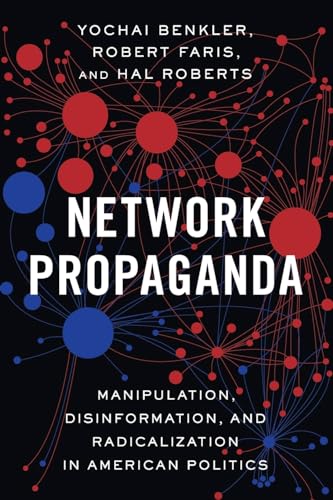
Understanding how information flows through our democracy has never been more crucial for anyone committed to personal growth and social consciousness. This groundbreaking study offers readers an unprecedented look into the media ecosystem that shaped American political discourse during the tumultuous 2016 presidential election and beyond, revealing patterns that continue to influence how we understand truth, community, and civic engagement today.
Drawing on an analysis of millions of stories, social media posts, and digital interactions, this work presents compelling evidence about the asymmetric nature of modern media polarization. Rather than finding equivalent partisan bubbles on both sides of the political spectrum, the research reveals a striking imbalance in how different segments of the population consume and share information. One portion of the media ecosystem maintained connections to professional journalism and fact-checking norms, while another segment became increasingly insulated, creating what can only be described as a propaganda feedback loop that operated largely independent of traditional journalistic standards.
For readers seeking to understand the deeper currents shaping our collective consciousness, this exploration goes far beyond simple accusations of "fake news" or partisan finger-pointing. The comprehensive data analysis demonstrates how specific media outlets, social media dynamics, and political actors combined to create an environment where disinformation could flourish in ways unprecedented in modern American history. The evidence shows how certain narratives, regardless of their factual basis, gained tremendous traction through coordinated repetition and amplification, effectively creating alternative realities for millions of Americans.
Read more ▼
The Descent of Man, and Selection in Relation to Sex
Charles Darwin
Susan J. Jeffers

Александр Исаевич Солженицын

C. E. Lindgren
The quest for happiness often leads to frustration, as many fail to realize that the...

Reaching sixty can evoke complex emotions, blending relief with ongoing ambition. This...

The quest for life's purpose often leads to unsatisfactory answers. This article...

Romantic love is a complex emotion shaped by historical, cultural, and biological...

Imagine going through one of the most physically and emotionally demanding experiences...

Have you ever argued over something that wasn't actually said? From cultural differences...

Daily actions often conflict with personal beliefs due to past experiences. By utilizing...

Therapists often use dream interpretation to delve into patients' emotions, but true...