
Happiness & Success
Achieving Happiness Through Acceptance of Life
The quest for happiness often leads to frustration, as many fail to realize that the...








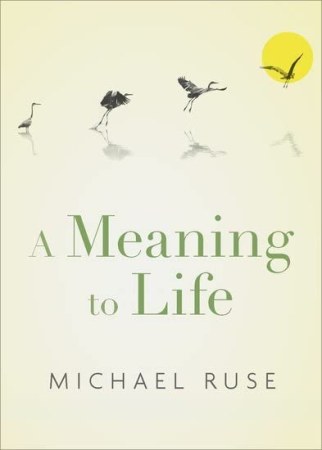
Throughout human history, the question of life's meaning has haunted and inspired us in equal measure. Why are we here? What gives our existence purpose? Is there an inherent meaning woven into the fabric of the universe, or must we create our own? These profound questions lie at the heart of an illuminating exploration that bridges philosophy, science, evolutionary biology, and personal development to offer readers a fresh perspective on one of humanity's oldest puzzles.
Drawing on decades of expertise in both the philosophy of science and evolutionary theory, this work presents a compelling argument that meaning is not something we passively discover but something we actively create through our relationships, commitments, and values. Rather than searching for cosmic significance handed down from above, readers are invited to consider how evolution has shaped us to be meaning-seeking creatures who find fulfillment through connection, purpose, and contribution to something larger than ourselves.
The journey begins with an honest examination of why traditional sources of meaning—particularly religious frameworks—have lost their hold on many modern individuals. Without dismissing the value that faith provides for believers, the exploration acknowledges the genuine crisis faced by those who cannot accept supernatural explanations yet still yearn for purpose and significance. This sets the stage for a naturalistic approach to meaning that doesn't require belief in the transcendent but instead finds profound depth in our biological nature and social bonds.
Read more ▼
B. Alan Wallace
Norman Doidge

Jonathan Robinson

52 Things You Can Do to Raise Your Self-Esteem
Jerry A. Minchinton
The quest for happiness often leads to frustration, as many fail to realize that the...

Reaching sixty can evoke complex emotions, blending relief with ongoing ambition. This...

The quest for life's purpose often leads to unsatisfactory answers. This article...

Romantic love is a complex emotion shaped by historical, cultural, and biological...

Imagine going through one of the most physically and emotionally demanding experiences...

Daily actions often conflict with personal beliefs due to past experiences. By utilizing...

Have you ever argued over something that wasn't actually said? From cultural differences...

Therapists often use dream interpretation to delve into patients' emotions, but true...