
Happiness & Success
Achieving Happiness Through Acceptance of Life
The quest for happiness often leads to frustration, as many fail to realize that the...








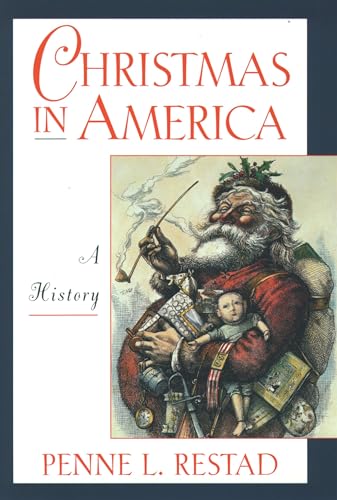
Few cultural phenomena reveal as much about who we are as a people than the ways we celebrate our most cherished holidays. Tracing the evolution of America's most beloved winter celebration from its contested colonial beginnings to its current commercial extravaganza offers readers a remarkable mirror for understanding personal and collective identity, values, and the ongoing negotiation between tradition and change that shapes our lives.
The journey begins in unexpected territory: early America actively resisted and even banned Christmas celebrations. Puritans viewed the holiday with suspicion, seeing it as a dangerous remnant of Catholic excess with no biblical foundation. This resistance reveals something profound about how cultures construct meaning and how individual conscience wrestles with inherited tradition. Understanding this initial rejection helps modern readers appreciate that our current assumptions about "traditional" celebrations are themselves relatively recent inventions, freeing us to examine which aspects of holiday observance genuinely serve our highest values and which simply reflect unquestioned conformity.
The transformation of Christmas into America's premier cultural event occurred gradually through the nineteenth century, driven by forces that continue to shape personal and social life today. The rise of domesticity, the cult of childhood, the growth of consumer culture, and waves of immigration each contributed distinct elements to the evolving celebration. German immigrants brought Christmas trees, Dutch settlers contributed Santa Claus traditions, and English customs like caroling and gift-giving merged with uniquely American innovations. This cultural blending demonstrates how communities create shared meaning from diverse sources, offering valuable insights for anyone navigating multiple cultural identities or seeking to honor heritage while embracing change.
Read more ▼
Mary Anne Radmacher

Ric Giardina

Henry David Thoreau

Jack Kornfield, Jon Kabat-Zinn
The quest for happiness often leads to frustration, as many fail to realize that the...

Reaching sixty can evoke complex emotions, blending relief with ongoing ambition. This...

The quest for life's purpose often leads to unsatisfactory answers. This article...

Imagine going through one of the most physically and emotionally demanding experiences...

Romantic love is a complex emotion shaped by historical, cultural, and biological...

Daily actions often conflict with personal beliefs due to past experiences. By utilizing...

Have you ever argued over something that wasn't actually said? From cultural differences...

Therapists often use dream interpretation to delve into patients' emotions, but true...