
Happiness & Success
Achieving Happiness Through Acceptance of Life
The quest for happiness often leads to frustration, as many fail to realize that the...








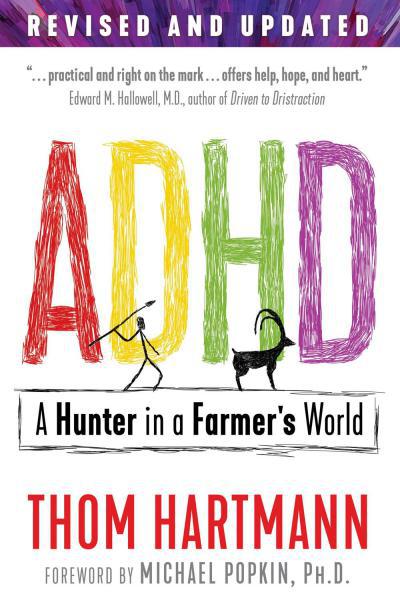
For decades, what we call Attention Deficit Hyperactivity Disorder has been framed as a deficit, a disorder, something broken that needs fixing. Yet a revolutionary perspective challenges this limiting view and invites us to reconsider one of the most common neurological differences affecting millions of children and adults worldwide. What if the traits associated with ADHD aren't deficits at all, but rather a different way of experiencing and interacting with the world—one that carries unique strengths, gifts, and evolutionary advantages?
This groundbreaking work presents the Hunter versus Farmer theory, a paradigm-shifting framework that recontextualizes ADHD characteristics as adaptive traits that once ensured survival. In hunter-gatherer societies, the ability to constantly scan the environment, make quick decisions, hyperfocus when tracking prey, and shift attention rapidly were essential skills. Those with these traits thrived as hunters. However, as human civilization shifted toward agricultural societies requiring sustained attention to repetitive tasks, patience for delayed gratification, and adherence to structured routines, these same hunter traits became disadvantageous in the new farmer-dominant culture.
Readers discover how understanding this fundamental difference transforms the conversation from pathology to diversity. The restlessness, distractibility, and impulsivity often viewed as problematic symptoms suddenly make sense as hunter traits struggling within a farmer-designed world. The constant need for stimulation, the ability to hyperfocus on interesting challenges, the creative problem-solving approach, and the capacity for risk-taking all emerge as potential strengths rather than weaknesses.
Read more ▼
Todd Miller, Tim Pabon

Thomas Berry

Laura Berman Fortgang
Sweet fruit from the bitter tree
Mark Andreas
The quest for happiness often leads to frustration, as many fail to realize that the...

Reaching sixty can evoke complex emotions, blending relief with ongoing ambition. This...

The quest for life's purpose often leads to unsatisfactory answers. This article...

Romantic love is a complex emotion shaped by historical, cultural, and biological...

Imagine going through one of the most physically and emotionally demanding experiences...

Daily actions often conflict with personal beliefs due to past experiences. By utilizing...

Have you ever argued over something that wasn't actually said? From cultural differences...

Therapists often use dream interpretation to delve into patients' emotions, but true...