
Happiness & Success
Achieving Happiness Through Acceptance of Life
The quest for happiness often leads to frustration, as many fail to realize that the...








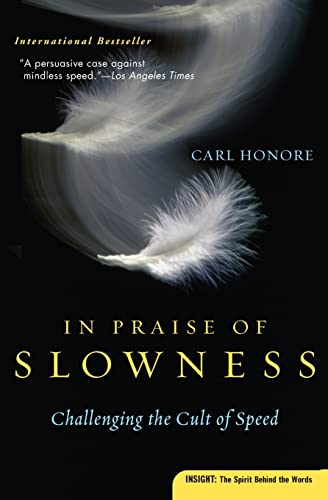
Our modern world operates at a relentless pace, demanding constant productivity, instant responses, and perpetual motion. We eat fast food, speed-date, and multitask our way through life, barely pausing to catch our breath. Yet beneath the surface of this frenetic existence, a growing number of people sense that something vital is being lost in the rush. This groundbreaking exploration examines a global movement that challenges the cult of speed and champions a more balanced, deliberate approach to living.
At the heart of this work lies a deceptively simple yet revolutionary idea: that faster is not always better. Through compelling research, personal anecdotes, and visits to communities around the world embracing slower rhythms, readers discover how the acceleration of modern life affects every aspect of human experience. From work and relationships to food, health, sex, and child-rearing, the tyranny of the clock has infiltrated our most intimate moments, often diminishing rather than enhancing the quality of our lives.
The investigation begins by tracing the historical roots of our obsession with speed, from the Industrial Revolution's mechanization of time to the digital age's compression of every activity into smaller and smaller increments. What emerges is a portrait of a society addicted to velocity, where busyness has become a status symbol and downtime feels like wasted time. Yet this cultural conditioning comes at tremendous cost. Stress-related illnesses proliferate, relationships suffer from neglect, creativity withers under constant pressure, and the simple pleasure of being present in the moment becomes increasingly rare.
Read more ▼
Dan Furst

Stephanie Dowrick

Christina Baldwin

Michael Collopy
The quest for happiness often leads to frustration, as many fail to realize that the...

Reaching sixty can evoke complex emotions, blending relief with ongoing ambition. This...

The quest for life's purpose often leads to unsatisfactory answers. This article...

Imagine going through one of the most physically and emotionally demanding experiences...

Romantic love is a complex emotion shaped by historical, cultural, and biological...

Daily actions often conflict with personal beliefs due to past experiences. By utilizing...

Have you ever argued over something that wasn't actually said? From cultural differences...

Therapists often use dream interpretation to delve into patients' emotions, but true...