

Happiness & Success
Achieving Happiness Through Acceptance of Life
The quest for happiness often leads to frustration, as many fail to realize that the...








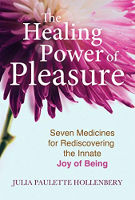
Our modern world has cultivated a peculiar relationship with pleasure, often treating it as something to be earned, rationed, or even mistrusted. We've been conditioned to believe that true growth comes through struggle, that healing requires suffering, and that pleasure itself is somehow frivolous or self-indulgent. Yet what if this fundamental misconception has been preventing us from accessing one of our most powerful healing resources?
Emerging research in neuroscience, psychology, and somatic therapies reveals that pleasure is far more than momentary gratification. It serves as a biological imperative, a healing force that can rewire our nervous systems, restore our vitality, and reconnect us with our innate wisdom. When we understand pleasure not as luxury but as essential nourishment, we unlock pathways to profound transformation that willpower and discipline alone cannot access.
This comprehensive exploration challenges readers to reconsider everything they've been taught about pleasure and its role in wellbeing. Drawing from cutting-edge neuroscience, ancient wisdom traditions, and practical therapeutic approaches, the work reveals how our capacity for pleasure directly influences our physical health, emotional resilience, and spiritual connection. The nervous system, it turns out, doesn't heal optimally in states of chronic stress and deprivation. Instead, healing accelerates when we cultivate safety, ease, and genuine pleasure in our bodies and lives.
Read more ▼
The quest for happiness often leads to frustration, as many fail to realize that the...

Reaching sixty can evoke complex emotions, blending relief with ongoing ambition. This...

The quest for life's purpose often leads to unsatisfactory answers. This article...

Romantic love is a complex emotion shaped by historical, cultural, and biological...

Imagine going through one of the most physically and emotionally demanding experiences...

Daily actions often conflict with personal beliefs due to past experiences. By utilizing...

Have you ever argued over something that wasn't actually said? From cultural differences...

Therapists often use dream interpretation to delve into patients' emotions, but true...