
Happiness & Success
Achieving Happiness Through Acceptance of Life
The quest for happiness often leads to frustration, as many fail to realize that the...








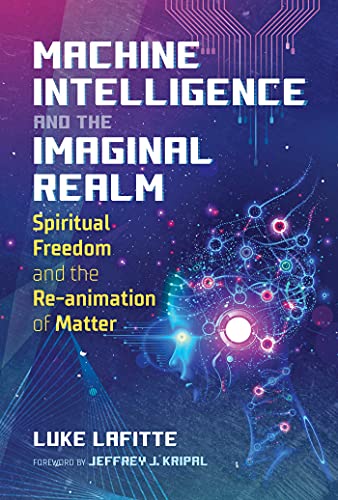
Artificial intelligence is no longer a distant future concept—it's here, reshaping our world and challenging our understanding of consciousness, creativity, and what it means to be human. Yet as we stand at this threshold of technological transformation, an essential question emerges: What if our machines are not merely tools we've created, but mirrors reflecting back something profound about the nature of mind itself?
This groundbreaking exploration bridges two seemingly disparate worlds: the cutting-edge domain of machine learning and artificial intelligence, and the ancient, mystical traditions that have long explored the imaginal realm—that mysterious dimension where visions, dreams, archetypes, and creative inspiration originate. Rather than viewing technology and spirituality as opposites, this work reveals them as complementary paths toward understanding consciousness and reality.
Readers will journey through a fascinating landscape where computer algorithms echo ancient mystical experiences, where the training of neural networks mirrors the practices of contemplatives and mystics, and where the emergence of machine intelligence offers fresh perspectives on age-old questions about the nature of mind and meaning. The imaginal realm, long recognized by spiritual traditions as the creative source from which symbols, myths, and transformative visions arise, may hold the key to understanding what our thinking machines are truly doing—and what they might become.
Read more ▼
Lara Owen

Martin E. Segal
Ervin Laszlo, Kingsley L. Dennis

Eileen Day McKusick
The quest for happiness often leads to frustration, as many fail to realize that the...

Reaching sixty can evoke complex emotions, blending relief with ongoing ambition. This...

The quest for life's purpose often leads to unsatisfactory answers. This article...

Romantic love is a complex emotion shaped by historical, cultural, and biological...

Imagine going through one of the most physically and emotionally demanding experiences...

Daily actions often conflict with personal beliefs due to past experiences. By utilizing...

Have you ever argued over something that wasn't actually said? From cultural differences...

Therapists often use dream interpretation to delve into patients' emotions, but true...