
Happiness & Success
Achieving Happiness Through Acceptance of Life
The quest for happiness often leads to frustration, as many fail to realize that the...








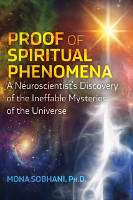
For centuries, the scientific establishment has maintained a rigid boundary between the material world and matters of consciousness, spirit, and phenomena that defy conventional explanation. Yet what happens when a neuroscientist trained in the most rigorous methods of empirical research begins to encounter evidence that challenges everything she learned in academia? What unfolds is a fascinating journey that bridges the seemingly unbridgeable gap between hard science and spiritual experience, offering readers a fresh perspective on the nature of reality itself.
This groundbreaking exploration begins with a personal crisis of faith in the scientific paradigm. A cognitive neuroscientist, dedicated to understanding the brain through conventional methods, finds her worldview shattered by undeniable personal experiences and compelling research that suggest consciousness may be far more than mere neural activity. Rather than dismissing these anomalies, as many in the scientific community reflexively do, a courageous investigation begins into the actual evidence for phenomena long relegated to the fringes of acceptable inquiry.
Readers will discover a comprehensive examination of research into telepathy, precognition, near-death experiences, mediumship, and other phenomena that mainstream science has historically dismissed without proper investigation. The examination goes beyond anecdotal accounts to delve into controlled laboratory studies, meta-analyses, and rigorously designed experiments conducted at prestigious institutions. The evidence presented is not cherry-picked sensationalism but rather peer-reviewed research that has been systematically ignored or dismissed by a scientific establishment uncomfortable with findings that challenge materialist assumptions.
Read more ▼
Doreen Virtue
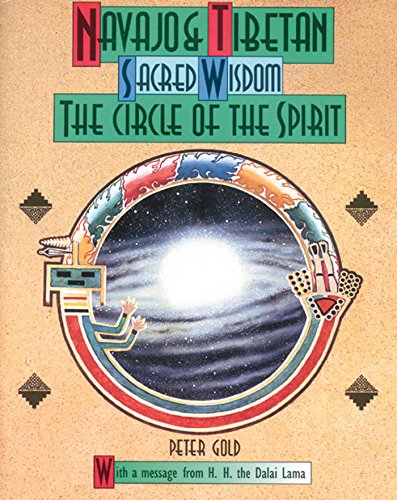
Navajo & Tibetan sacred wisdom
Gold, Peter

Linda Miller-Russo, Peter Miller-Russo
Mark Nepo
The quest for happiness often leads to frustration, as many fail to realize that the...

Reaching sixty can evoke complex emotions, blending relief with ongoing ambition. This...

The quest for life's purpose often leads to unsatisfactory answers. This article...

Imagine going through one of the most physically and emotionally demanding experiences...

Romantic love is a complex emotion shaped by historical, cultural, and biological...

Daily actions often conflict with personal beliefs due to past experiences. By utilizing...

Have you ever argued over something that wasn't actually said? From cultural differences...

Therapists often use dream interpretation to delve into patients' emotions, but true...