



Happiness & Success
Achieving Happiness Through Acceptance of Life
The quest for happiness often leads to frustration, as many fail to realize that the...








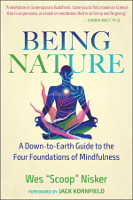
Deep within the fabric of existence lies a profound truth that modern humans have largely forgotten: we are not separate from nature, but rather intricate expressions of the same biological, chemical, and cosmic forces that animate all life on Earth. This groundbreaking exploration invites readers on a transformative journey to rediscover their fundamental identity as nature itself, dissolving the artificial boundaries between self and environment that create so much of our contemporary suffering and disconnection.
Drawing upon insights from evolutionary biology, neuroscience, Buddhist philosophy, and ecological awareness, this work presents a radical shift in perspective that has the power to revolutionize how we understand ourselves and our place in the living world. Rather than viewing humans as exceptional beings standing apart from or above the natural order, readers are guided to recognize themselves as evolutionary expressions of the same cosmic unfolding that created stars, mountains, forests, and oceans. Every thought, emotion, and sensation experienced in human consciousness represents nature knowing itself through a particular form.
The exploration begins with our evolutionary origins, tracing the remarkable journey from single-celled organisms to complex human beings. Through this lens, readers discover that the same processes that shaped dinosaurs, flowers, and fungi have shaped human bodies and minds. The anxiety felt before an important presentation connects directly to ancient survival mechanisms. The joy experienced in beautiful landscapes reflects our species' deep co-evolution with specific environments. Even our capacity for love, creativity, and spiritual insight emerges from millions of years of natural selection and adaptation.
Read more ▼
The quest for happiness often leads to frustration, as many fail to realize that the...

Reaching sixty can evoke complex emotions, blending relief with ongoing ambition. This...

The quest for life's purpose often leads to unsatisfactory answers. This article...

Romantic love is a complex emotion shaped by historical, cultural, and biological...

Imagine going through one of the most physically and emotionally demanding experiences...

Daily actions often conflict with personal beliefs due to past experiences. By utilizing...

Have you ever argued over something that wasn't actually said? From cultural differences...

Therapists often use dream interpretation to delve into patients' emotions, but true...