
Happiness & Success
Achieving Happiness Through Acceptance of Life
The quest for happiness often leads to frustration, as many fail to realize that the...








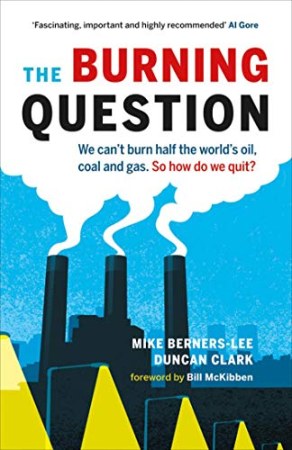
Climate change stands as perhaps the most pressing challenge of our time, yet most of us feel paralyzed when confronting it. We recycle diligently, switch to energy-efficient light bulbs, and perhaps drive a bit less, all while wondering if our individual actions truly matter in the face of such an enormous global crisis. This deeply researched yet accessible exploration cuts through the confusion and equivocation surrounding carbon emissions to reveal why decades of awareness haven't translated into meaningful action, and more importantly, what actually needs to happen to address this existential threat.
At the heart of this work lies a deceptively simple question: why, despite knowing about climate change for decades and having the technology to address it, do we continue burning fossil fuels at accelerating rates? The answer proves far more complex than simple human ignorance or apathy. Through careful analysis of economics, politics, psychology, and energy systems, readers discover how deeply embedded fossil fuels are in every aspect of modern life, from the food we eat to the buildings we inhabit to the global financial system itself.
The exploration begins by helping readers understand the true scale of our carbon dependency. Every product purchased, every service used, every aspect of contemporary existence carries a carbon footprint that extends far beyond the obvious. These invisible emissions permeate the entire supply chain of modern life, making it virtually impossible to opt out individually. Rather than inducing guilt or helplessness, this comprehensive carbon accounting illuminates why personal lifestyle changes alone, while valuable, cannot solve a problem rooted in systemic infrastructure and economic incentives.
Read more ▼
Selby, John

The Arbinger Institute, Blanca González Villegas

John Kallas, John Kallas

Laurie Martin
The quest for happiness often leads to frustration, as many fail to realize that the...

Reaching sixty can evoke complex emotions, blending relief with ongoing ambition. This...

The quest for life's purpose often leads to unsatisfactory answers. This article...

Imagine going through one of the most physically and emotionally demanding experiences...

Romantic love is a complex emotion shaped by historical, cultural, and biological...

Daily actions often conflict with personal beliefs due to past experiences. By utilizing...

Have you ever argued over something that wasn't actually said? From cultural differences...

Therapists often use dream interpretation to delve into patients' emotions, but true...