
Happiness & Success
Achieving Happiness Through Acceptance of Life
The quest for happiness often leads to frustration, as many fail to realize that the...








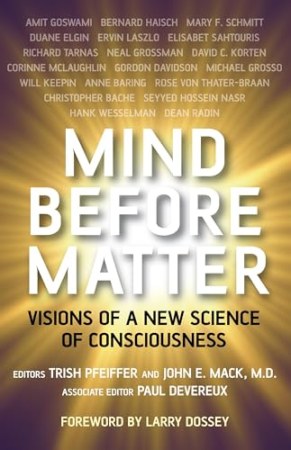
Consciousness sits at the very heart of human experience, yet mainstream science has long struggled to explain how our subjective inner worlds emerge from objective physical reality. This groundbreaking exploration challenges the conventional materialist paradigm that has dominated Western thought for centuries, presenting compelling evidence that consciousness may not be merely a byproduct of brain activity, but rather a fundamental aspect of the universe itself.
Drawing from cutting-edge research in psychology, neuroscience, physics, and ancient wisdom traditions, this work invites readers on a transformative journey into the nature of reality and our place within it. Rather than accepting the reductionist view that reduces human experience to mere chemical reactions and neural firings, the material presented here examines extraordinary states of consciousness, near-death experiences, mystical encounters, and anomalous phenomena that suggest consciousness extends far beyond the confines of our physical brains.
Readers will encounter fascinating case studies and rigorous scientific investigation that point toward a radically different understanding of mind and matter. The exploration includes examination of indigenous knowledge systems, shamanic practices, and contemplative traditions that have long recognized the primacy of consciousness. These ancient insights are brought into dialogue with modern research in quantum physics, where the role of the observer in shaping reality has posed profound questions about the relationship between consciousness and the material world.
Read more ▼
Randy Peyser
Mihaly Csikszentmihalyi
Ending the Pursuit of Happiness
Barry Magid

Astrology for the light side of the brain
Kim Rogers-Gallagher
The quest for happiness often leads to frustration, as many fail to realize that the...

Reaching sixty can evoke complex emotions, blending relief with ongoing ambition. This...

The quest for life's purpose often leads to unsatisfactory answers. This article...

Romantic love is a complex emotion shaped by historical, cultural, and biological...

Imagine going through one of the most physically and emotionally demanding experiences...

Daily actions often conflict with personal beliefs due to past experiences. By utilizing...

Have you ever argued over something that wasn't actually said? From cultural differences...

Therapists often use dream interpretation to delve into patients' emotions, but true...