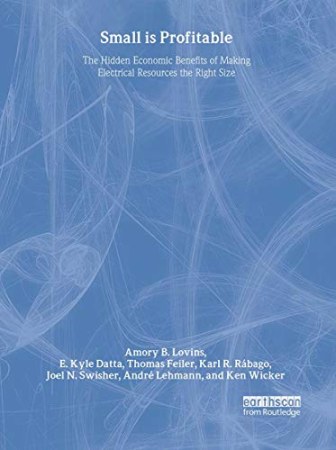
Challenging the pervasive assumption that bigger is always better, this groundbreaking work demonstrates how thinking small, acting locally, and embracing modular solutions can revolutionize not only our economy and environment but also our personal sense of agency and empowerment in an increasingly complex world.
At its heart lies a radical proposition backed by exhaustive research and real-world examples: distributed, small-scale systems consistently outperform their larger, centralized counterparts across virtually every sector of society. From energy production to manufacturing, agriculture to finance, the evidence reveals that human-scale solutions offer superior flexibility, resilience, efficiency, and sustainability. More importantly for those on a journey of personal transformation, these insights provide a powerful framework for reclaiming control over the forces shaping our lives and communities.
The exploration begins with energy systems, revealing how rooftop solar panels, local wind turbines, and efficient building design can deliver cleaner, cheaper, and more reliable power than massive centralized utilities. Beyond the technical advantages, these distributed energy solutions embody a profound shift in consciousness—from passive consumption to active participation, from dependence to self-reliance. This paradigm applies equally to personal transformation: small, consistent changes in daily habits create more lasting impact than dramatic but unsustainable overhauls.
Economic analysis throughout the text dismantles conventional wisdom about economies of scale, demonstrating how small, modular investments reduce financial risk, respond more quickly to changing needs, and create wealth that stays within communities rather than extracting it upward. This economic democracy mirrors the principles of personal empowerment—recognizing that meaningful change emerges from the grassroots, not imposed from distant centers of authority.
Readers discover 207 distinct advantages that small-scale solutions hold over large centralized systems. These benefits extend far beyond simple cost savings into realms of reliability, adaptability, innovation, and human dignity. Small systems fail gracefully rather than catastrophically. They can be implemented incrementally, learning and improving along the way. They create local jobs and strengthen community bonds. They honor diversity rather than imposing one-size-fits-all solutions.
The implications for personal growth prove equally profound. Just as distributed power systems prove more resilient than fragile centralized grids, individuals who cultivate multiple small sources of meaning, income, and connection in their lives demonstrate greater psychological resilience than those dependent on single large institutions. The philosophy encourages readers to think of themselves not as powerless consumers within vast systems, but as creative agents capable of designing solutions at human scale.
Environmental stewardship emerges naturally from this framework. Small, efficient, locally appropriate technologies minimize waste and pollution not through punishment or sacrifice, but through elegant design that aligns economic incentives with ecological health. This represents a spiritually mature approach to our relationship with Earth—one based on wisdom and care rather than domination and exploitation.
The work also addresses the psychology of change itself, recognizing that large, monolithic approaches to transformation—whether societal or personal—often generate resistance and rigidity. Small steps, taken with awareness and intention, create momentum without triggering defensive reactions. This insight applies equally to changing energy systems and changing personal habits.
What makes this exploration particularly valuable for those committed to conscious living is how it bridges inner and outer work. The same principles that make small-scale renewable energy superior—modularity, diversity, feedback loops, local knowledge, and appropriate scale—apply directly to designing a meaningful life. Both require questioning inherited assumptions, thinking systemically, and trusting in distributed intelligence rather than centralized control.
Throughout, rigorous analysis combines with inspiring examples of communities and individuals who have implemented these principles successfully. These stories demonstrate that small-scale solutions aren't merely theoretical ideals but practical alternatives already working in the real world, creating prosperity, health, and happiness while healing rather than harming our planet.
For readers seeking both personal transformation and meaningful contribution to collective wellbeing, this work provides intellectual ammunition, practical tools, and inspirational vision. It reveals that the path toward a more sustainable, equitable, and joyful world doesn't require sacrificing our wellbeing or waiting for permission from distant authorities. Instead, it invites us to recognize the power we already possess to create change at the scale where we live, work, and love—proving that small truly is not only beautiful, but profoundly profitable in every sense that matters.