

Happiness & Success
Achieving Happiness Through Acceptance of Life
The quest for happiness often leads to frustration, as many fail to realize that the...








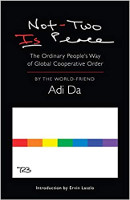
At a time when humanity faces unprecedented global challenges—from climate crisis to nuclear threats, from economic instability to social fragmentation—a radical rethinking of how we organize ourselves as a planetary civilization becomes not just desirable but essential for our very survival. This profound work offers nothing less than a complete reimagining of global governance, human cooperation, and the fundamental structures that have shaped human society for millennia.
The central premise challenges everything we've been taught about how nations should relate to one another. Rather than perpetuating the centuries-old pattern of competitive nation-states vying for dominance, resources, and security at each other's expense, a revolutionary alternative is presented: the recognition that separation itself is the root problem. The concept of "not-two" becomes the philosophical and practical foundation for a new form of global unity—not a unity that erases differences or imposes uniformity, but one that transcends the illusion that we are fundamentally separate entities in competition for survival.
Readers will encounter a comprehensive critique of the current world system, where sovereign nations operate as isolated units, each pursuing its own interests with little regard for the whole. This analysis demonstrates how such fragmentation inevitably leads to conflict, inequality, and the inability to address truly global challenges that recognize no borders. The military-industrial complex, economic exploitation, environmental degradation, and the constant threat of war are shown to be symptoms of a deeper disease: the failure to recognize our fundamental interconnectedness and interdependence.
Read more ▼
Catherine Sutton
Nick Inman

Patañjali.
The quest for happiness often leads to frustration, as many fail to realize that the...

Reaching sixty can evoke complex emotions, blending relief with ongoing ambition. This...

The quest for life's purpose often leads to unsatisfactory answers. This article...

Romantic love is a complex emotion shaped by historical, cultural, and biological...

Imagine going through one of the most physically and emotionally demanding experiences...

Have you ever argued over something that wasn't actually said? From cultural differences...

Daily actions often conflict with personal beliefs due to past experiences. By utilizing...

Therapists often use dream interpretation to delve into patients' emotions, but true...