
Happiness & Success
Achieving Happiness Through Acceptance of Life
The quest for happiness often leads to frustration, as many fail to realize that the...








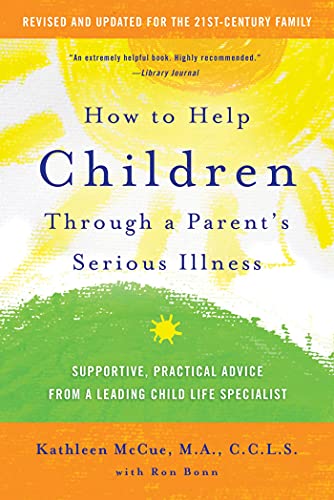
When a parent faces a serious illness, the entire family ecosystem shifts dramatically, and perhaps no one feels this seismic change more acutely than children. Yet parents often find themselves paralyzed by uncertainty about how to communicate with their children during such a frightening time. Should they share the full truth? How much detail is appropriate for different ages? What if they don't have all the answers themselves? These questions become even more urgent when parents are simultaneously navigating their own fear, pain, and treatment protocols.
This compassionate and deeply practical guide offers a lifeline to families navigating one of life's most challenging circumstances. Drawing on decades of clinical experience working with seriously ill parents and their children, the guidance provided here represents a bridge between the medical world and the emotional landscape of family life. Readers will discover that honest, age-appropriate communication isn't just helpful for children—it's essential for their psychological wellbeing and the family's collective resilience.
The foundation of the approach presented here rests on a simple but powerful truth: children already know when something is wrong. Their intuitive radar detects changes in household routines, parental emotions, and the unspoken tensions that fill the air. When adults maintain silence or provide only vague reassurances, children's imaginations often conjure scenarios far worse than reality. They may blame themselves, develop unfounded fears, or feel isolated and excluded from their own family's crisis. Breaking through this wall of silence with truthful, developmentally appropriate information actually reduces anxiety rather than increasing it.
Read more ▼
Caroline Sutherland

Hoffmann, David
Daniel Mintie, Julie K. Staples

Gary Null
The quest for happiness often leads to frustration, as many fail to realize that the...

Reaching sixty can evoke complex emotions, blending relief with ongoing ambition. This...

The quest for life's purpose often leads to unsatisfactory answers. This article...

Imagine going through one of the most physically and emotionally demanding experiences...

Romantic love is a complex emotion shaped by historical, cultural, and biological...

Daily actions often conflict with personal beliefs due to past experiences. By utilizing...

Have you ever argued over something that wasn't actually said? From cultural differences...

Therapists often use dream interpretation to delve into patients' emotions, but true...