
Happiness & Success
Achieving Happiness Through Acceptance of Life
The quest for happiness often leads to frustration, as many fail to realize that the...








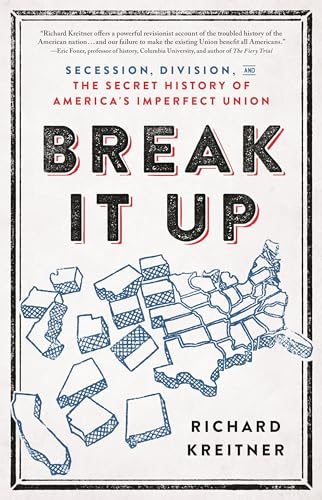
America's story has never been as unified as we've been taught to believe. From the earliest colonial days through the present moment, the dream of a permanently united nation has been challenged, questioned, and reimagined by citizens who wondered whether staying together truly serves the greater good. This profound historical exploration reveals a hidden thread running through American history—the persistent consideration of whether separation might sometimes be the path to peace, justice, and authentic self-determination.
The narrative unfolds like a revelation, showing readers that debates about disunion aren't merely relics of the Civil War era. Instead, they represent an ongoing conversation about power, identity, freedom, and the fundamental question of how diverse peoples with competing visions can or should coexist under a single government. From New England Federalists who contemplated leaving the union in the early 1800s to modern movements questioning the sustainability of our current arrangement, the exploration demonstrates how separation has been contemplated across the political spectrum and throughout every era of the nation's existence.
What makes this journey so compelling for those interested in personal empowerment and social consciousness is how it reframes our understanding of loyalty, belonging, and the courage to question inherited assumptions. Just as individuals must sometimes recognize when relationships or situations no longer serve their growth, communities and regions have grappled with similar questions on a larger scale. The historical examination provides a mirror for readers to reflect on their own lives—when is perseverance virtuous, and when does it become an obstacle to authentic living?
Read more ▼
Barbara Hand Clow
Edward M. Adams

Ruth L. Miller

J. D. Vance
The quest for happiness often leads to frustration, as many fail to realize that the...

Reaching sixty can evoke complex emotions, blending relief with ongoing ambition. This...

The quest for life's purpose often leads to unsatisfactory answers. This article...

Romantic love is a complex emotion shaped by historical, cultural, and biological...

Imagine going through one of the most physically and emotionally demanding experiences...

Have you ever argued over something that wasn't actually said? From cultural differences...

Daily actions often conflict with personal beliefs due to past experiences. By utilizing...

Therapists often use dream interpretation to delve into patients' emotions, but true...