

Happiness & Success
Achieving Happiness Through Acceptance of Life
The quest for happiness often leads to frustration, as many fail to realize that the...








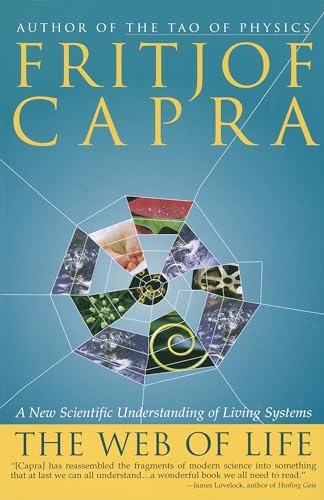
Understanding living systems through the lens of scientific discovery offers profound insights that extend far beyond biology textbooks and into every aspect of how we organize our professional lives, build sustainable businesses, and navigate economic challenges. This groundbreaking exploration reveals how the principles governing ecosystems, organisms, and natural networks can revolutionize our approach to organizations, economics, and career development in an increasingly complex world.
Drawing from decades of research in systems thinking, quantum physics, and complexity theory, readers are invited to reconsider fundamental assumptions about how the world works. The mechanistic worldview that has dominated Western thought for centuries—viewing organizations as machines with replaceable parts—is challenged and replaced with a more sophisticated understanding based on patterns, relationships, and processes. This shift in perspective has enormous implications for anyone seeking to thrive in modern professional environments where adaptability, collaboration, and innovation determine success.
The journey begins with an examination of how living systems maintain themselves, grow, and evolve. Through accessible explanations of cutting-edge science, readers discover that nature doesn't operate through hierarchical command-and-control structures but through networks of relationships and feedback loops. Organisms survive not through domination but through cooperation and symbiosis. These insights directly translate into practical wisdom for modern workplaces, where rigid hierarchies increasingly give way to networked teams, collaborative partnerships, and organic organizational structures.
Read more ▼
Mark Silver
Joseph Chilton Pearce
Tony Schwartz
The quest for happiness often leads to frustration, as many fail to realize that the...

Reaching sixty can evoke complex emotions, blending relief with ongoing ambition. This...

The quest for life's purpose often leads to unsatisfactory answers. This article...

Romantic love is a complex emotion shaped by historical, cultural, and biological...

Imagine going through one of the most physically and emotionally demanding experiences...

Daily actions often conflict with personal beliefs due to past experiences. By utilizing...

Have you ever argued over something that wasn't actually said? From cultural differences...

Therapists often use dream interpretation to delve into patients' emotions, but true...