
Happiness & Success
Achieving Happiness Through Acceptance of Life
The quest for happiness often leads to frustration, as many fail to realize that the...









Understanding the intricate connection between our nervous system and our emotional experiences opens doorways to profound personal transformation. This groundbreaking guide illuminates how our autonomic nervous system shapes not only our responses to stress and trauma but also our capacity for connection, safety, and healing. Drawing from decades of neuroscience research, it presents revolutionary insights into why we react the way we do in challenging situations and how we can harness this knowledge for profound personal growth.
At the heart of this exploration lies a fundamental reconceptualization of how our nervous system evolved to help us navigate social environments and respond to threat. Rather than viewing our stress responses as simply "fight or flight," readers discover a sophisticated three-part system that operates beneath our conscious awareness. This hierarchical system includes an ancient immobilization response, the more familiar mobilization responses of fight and flight, and a uniquely mammalian system designed specifically for social engagement and connection. Understanding these three neural pathways revolutionizes how we interpret our own reactions and those of others around us.
The guide offers practical wisdom for recognizing which neural state dominates in any given moment. When we understand that certain behaviors—withdrawal, aggression, or connection—stem from predictable nervous system responses rather than character flaws, we gain compassion for ourselves and others. This reframing proves particularly valuable for anyone struggling with anxiety, depression, trauma, or relationship challenges. Instead of judging ourselves harshly for responses that feel automatic and uncontrollable, we learn to recognize the adaptive survival strategies our nervous system employs.
Read more ▼
Barton Goldsmith, Marlena Hunter

Kira Asatryan
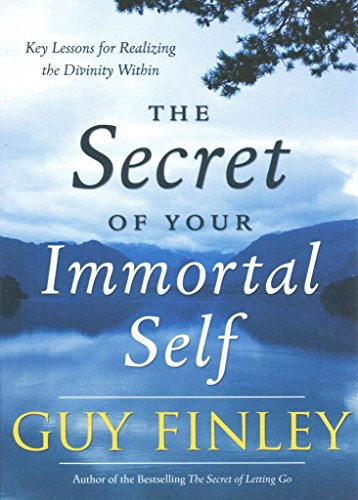
The secret of your immortal self
Guy Finley

Sandra Steingraber
The quest for happiness often leads to frustration, as many fail to realize that the...

Reaching sixty can evoke complex emotions, blending relief with ongoing ambition. This...

The quest for life's purpose often leads to unsatisfactory answers. This article...

Romantic love is a complex emotion shaped by historical, cultural, and biological...

Imagine going through one of the most physically and emotionally demanding experiences...

Daily actions often conflict with personal beliefs due to past experiences. By utilizing...

Have you ever argued over something that wasn't actually said? From cultural differences...

Therapists often use dream interpretation to delve into patients' emotions, but true...