
Happiness & Success
Achieving Happiness Through Acceptance of Life
The quest for happiness often leads to frustration, as many fail to realize that the...








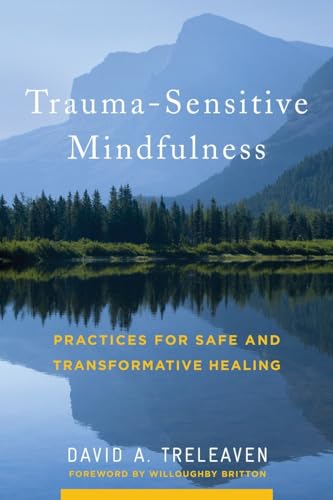
Mindfulness has become a cornerstone of contemporary wellness practices, recommended by therapists, taught in schools, and embraced by millions seeking relief from stress and anxiety. Yet for many people, particularly those who have experienced trauma, traditional mindfulness practices can unexpectedly trigger distress, dissociation, or retraumatization. This groundbreaking work bridges the gap between the mindfulness movement and trauma awareness, offering a revolutionary approach that makes contemplative practices safe and accessible for everyone.
At the heart of this essential guide lies a critical recognition: what heals one person may harm another. While mindfulness practices like focused breathing, body scans, and present-moment awareness offer profound benefits for many practitioners, these same techniques can activate traumatic memories and overwhelming sensations for trauma survivors. When instructed to "sit with discomfort" or "observe whatever arises," individuals carrying unresolved trauma may find themselves flooded with unbearable emotions or disconnected from their bodies entirely. Understanding why this happens and how to prevent it represents a crucial evolution in both mindfulness teaching and trauma treatment.
Drawing on neuroscience research, clinical psychology, and contemplative traditions, this resource illuminates how trauma fundamentally alters the nervous system and changes the way individuals experience their inner landscape. Trauma survivors often develop finely tuned threat detection systems that remain hypervigilant long after danger has passed. Their window of tolerance for uncomfortable sensations may be significantly narrower than that of non-traumatized individuals. When mindfulness practices push beyond this window, the results can range from mild anxiety to full-blown panic attacks or dissociative episodes.
Read more ▼
Ching-shan Liu
Putting Out the Fire of Addiction
Roger Klinger

Irvin D. Yalom
Deepak Chopra, Rudolph E. Tanzi
The quest for happiness often leads to frustration, as many fail to realize that the...

Reaching sixty can evoke complex emotions, blending relief with ongoing ambition. This...

The quest for life's purpose often leads to unsatisfactory answers. This article...

Romantic love is a complex emotion shaped by historical, cultural, and biological...

Imagine going through one of the most physically and emotionally demanding experiences...

Daily actions often conflict with personal beliefs due to past experiences. By utilizing...

Have you ever argued over something that wasn't actually said? From cultural differences...

Therapists often use dream interpretation to delve into patients' emotions, but true...