
Happiness & Success
Achieving Happiness Through Acceptance of Life
The quest for happiness often leads to frustration, as many fail to realize that the...








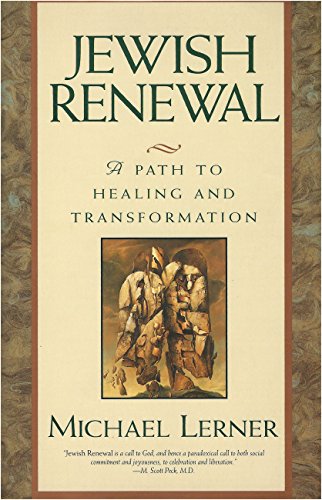
At a time when many people feel disconnected from traditional religious institutions yet hunger for authentic spiritual meaning, this groundbreaking work offers a transformative vision for revitalizing one of the world's oldest spiritual traditions while addressing the deepest needs of contemporary seekers. The approach presented here speaks not only to those raised within Jewish communities but to anyone searching for a spirituality that integrates personal transformation with social justice, intellectual rigor with emotional depth, and ancient wisdom with modern consciousness.
The central premise challenges readers to move beyond seeing religion as merely a set of inherited rituals or ethnic identity markers. Instead, it presents spirituality as a living, breathing practice that can address the profound alienation and meaninglessness that plague modern life. This vision recognizes that many people have turned away from organized religion not because they lack spiritual yearning, but because traditional institutions have often failed to speak to their deepest questions about purpose, connection, and ethical living in a complex world.
Readers will discover a radical reimagining of spiritual practice that places healing and transformation at its center. The framework developed throughout these pages demonstrates how ancient teachings and practices can be reinterpreted for contemporary life without losing their essential power and authenticity. This isn't about watering down tradition or making it more palatable, but rather about excavating the revolutionary and transformative elements that may have been obscured by centuries of institutionalization and accommodation to surrounding cultures.
Read more ▼
Jalaja Bonheim

Maril Crabtree
Newton, Michael
The divine proportion: a study in mathematical beauty
H. E. Huntley
The quest for happiness often leads to frustration, as many fail to realize that the...

Reaching sixty can evoke complex emotions, blending relief with ongoing ambition. This...

The quest for life's purpose often leads to unsatisfactory answers. This article...

Romantic love is a complex emotion shaped by historical, cultural, and biological...

Imagine going through one of the most physically and emotionally demanding experiences...

Daily actions often conflict with personal beliefs due to past experiences. By utilizing...

Have you ever argued over something that wasn't actually said? From cultural differences...

Therapists often use dream interpretation to delve into patients' emotions, but true...