



Happiness & Success
Achieving Happiness Through Acceptance of Life
The quest for happiness often leads to frustration, as many fail to realize that the...








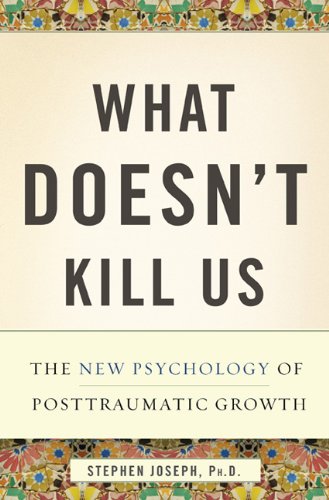
When traumatic events strike our lives, we typically think of them as purely destructive forces that leave us damaged and diminished. Yet emerging research in psychology reveals a profoundly different truth: many people who face terrible adversity don't just survive or return to their baseline—they actually grow stronger, wiser, and more fulfilled than they were before their ordeal.
This groundbreaking exploration of post-traumatic growth challenges our fundamental assumptions about resilience and human potential. Drawing on decades of clinical research and real-life stories, it demonstrates that trauma, while undeniably painful, can serve as a catalyst for remarkable positive transformation. Rather than viewing psychological suffering as something to merely endure or overcome, readers discover how adversity can become a doorway to profound personal development.
The concept at the heart of this work represents a paradigm shift in how we understand human response to crisis. Traditional psychology has long focused on post-traumatic stress and the pathological consequences of terrible experiences. While acknowledging that trauma causes genuine suffering, this fresh perspective illuminates an often-overlooked phenomenon: the capacity for post-traumatic growth. Through compelling case studies and scientific evidence, readers encounter people who have faced unimaginable challenges—serious illness, bereavement, accidents, assault, and other life-shattering events—and emerged with deeper relationships, greater appreciation for life, enhanced personal strength, recognition of new possibilities, and enriched spiritual development.
Read more ▼
The quest for happiness often leads to frustration, as many fail to realize that the...

Reaching sixty can evoke complex emotions, blending relief with ongoing ambition. This...

The quest for life's purpose often leads to unsatisfactory answers. This article...

Romantic love is a complex emotion shaped by historical, cultural, and biological...

Imagine going through one of the most physically and emotionally demanding experiences...

Daily actions often conflict with personal beliefs due to past experiences. By utilizing...

Have you ever argued over something that wasn't actually said? From cultural differences...

Therapists often use dream interpretation to delve into patients' emotions, but true...