

Happiness & Success
Achieving Happiness Through Acceptance of Life
The quest for happiness often leads to frustration, as many fail to realize that the...








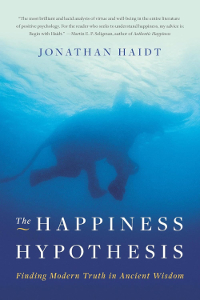
Ancient wisdom meets modern science in a groundbreaking exploration of what truly makes us happy and how we can live more fulfilling lives. Drawing on the profound insights of philosophers, religious thinkers, and sages from cultures around the world, this work bridges the gap between timeless truths and contemporary psychological research to offer readers a practical roadmap for personal transformation.
At the heart of this exploration lies a fascinating metaphor: the mind is like a rider on an elephant. The rider represents our conscious, rational thinking, while the elephant symbolizes our automatic emotional and intuitive processes. This powerful image illuminates why we so often struggle to change our behavior, why willpower alone rarely succeeds, and why understanding the relationship between these two aspects of ourselves is crucial for achieving lasting change. Readers discover that true personal growth requires learning to work with both the rider and the elephant, rather than fighting against our own nature.
The work examines ten profound ideas about happiness that have endured across cultures and millennia, subjecting each to the rigorous scrutiny of modern psychological science. What emerges is a nuanced understanding of which ancient insights hold up under scientific investigation and which need to be modified or reconsidered. This unique approach respects traditional wisdom while refusing to accept it uncritically, creating a synthesis that feels both grounded and inspiring.
Read more ▼
The quest for happiness often leads to frustration, as many fail to realize that the...

Reaching sixty can evoke complex emotions, blending relief with ongoing ambition. This...

The quest for life's purpose often leads to unsatisfactory answers. This article...

Romantic love is a complex emotion shaped by historical, cultural, and biological...

Imagine going through one of the most physically and emotionally demanding experiences...

Daily actions often conflict with personal beliefs due to past experiences. By utilizing...

Have you ever argued over something that wasn't actually said? From cultural differences...

Therapists often use dream interpretation to delve into patients' emotions, but true...