
Happiness & Success
Achieving Happiness Through Acceptance of Life
The quest for happiness often leads to frustration, as many fail to realize that the...








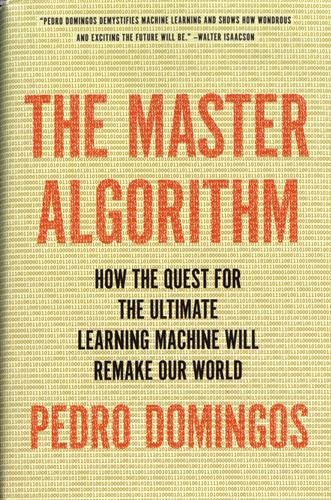
Imagine a world where machines could learn anything a human can learn, but faster, more efficiently, and with greater precision. This groundbreaking exploration takes readers on a journey into the heart of machine learning, revealing how algorithms are quietly reshaping every aspect of our lives—from the recommendations we receive online to medical diagnoses, from financial decisions to finding love. More importantly, it illuminates how understanding these invisible forces empowers us to navigate an increasingly automated world with greater awareness and intentionality.
At its core, this work examines five major approaches to machine learning that have emerged from different fields of study: symbolists who work with inverse deduction, connectionists who draw inspiration from neuroscience and the brain, evolutionaries who simulate natural selection, Bayesians who apply probabilistic reasoning, and analogizers who focus on pattern recognition and similarity. Each tribe, as they're called, offers a unique lens through which machines can learn from data, and each has achieved remarkable successes in specific domains. Understanding these approaches provides readers with a comprehensive framework for grasping how artificial intelligence actually works, demystifying technology that increasingly mediates our daily experiences.
The central proposition challenges us to consider whether a single universal learning algorithm might exist—one master approach that could combine the strengths of all five tribes and learn anything that can be learned from data. This isn't merely an academic question. Such an algorithm would represent perhaps the most transformative development in human history, fundamentally altering our relationship with knowledge, decision-making, and even consciousness itself. For readers focused on personal growth, this raises profound questions about human potential, the nature of learning, and what makes us uniquely human in an age of intelligent machines.
Read more ▼
Jim B. Tucker

Christopher Hitchens

Tami Lynn Kent

Patrick Thias Balmain
The quest for happiness often leads to frustration, as many fail to realize that the...

Reaching sixty can evoke complex emotions, blending relief with ongoing ambition. This...

The quest for life's purpose often leads to unsatisfactory answers. This article...

Imagine going through one of the most physically and emotionally demanding experiences...

Romantic love is a complex emotion shaped by historical, cultural, and biological...

Daily actions often conflict with personal beliefs due to past experiences. By utilizing...

Have you ever argued over something that wasn't actually said? From cultural differences...

Therapists often use dream interpretation to delve into patients' emotions, but true...