
Happiness & Success
Achieving Happiness Through Acceptance of Life
The quest for happiness often leads to frustration, as many fail to realize that the...








 People in northern China have a reduced life expectancy when compared with people living in the south due to higher concentrations of air pollution, a new study suggests.
 Researchers have discovered brain cells that control our appetite. This major discovery opens up new possibilities for creating more effective diets—and even future treatments to suppress one’s appetite by directly activating the brain’s tanycytes, bypassing food and the digestive system.
 Physical exercise may help people exert more control over impulsivity, a new, small study suggests. “There’s a lot of neuroscientific evidence that suggests mood-altering effects of physical activity could change how you make decisions...”
 Placebos have been found, at times, to work nearly as effectively as materialistic treatments. One series of studies covering more than one thousand patients showed that 35 percent reported significant relief from a variety of ailments after treatment with a placebo.
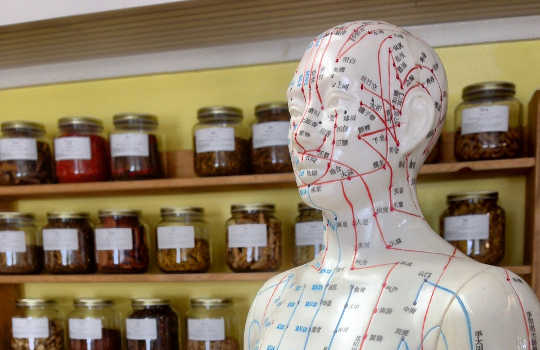 New research suggests that acupuncture may help patients suffering from certain esophageal disorders that make swallowing difficult.
 Affirmations are statements of intention that can be used for anything: to attract wealth, for life changes, to find a perfect partner, for self healing -- from curing diabetes to losing weight to quitting smoking, etc...
 Many of us know that our children’s posture is a problem. We struggle to know what to do about it, having already learned the futility of simply telling a child to “sit up straight.” Truth be told, we often are at a loss to know how to inhabit our own bodies in ways that are comfortable and relaxed, yet strong and energetic.
 It is surprising that sighing has not been a topic of empirical psychological research until the twenty-first century. About the only place sighing makes an appearance is in studies of panic disorder, where it has been shown that such patients “hit reset” about twice as frequently as control subjects...
 The most heavily used pesticide in California, elemental sulfur, may harm the respiratory health of children who live near farms that use it, new research suggests.
 Many women get happier in later life, report researchers, particularly in the years between 50 and 70.
 About 10% of us (including 20% of people over 60 and 50% of people over 70) suffer from fungal nail infections. So why do we get them, and does it matter?
 Scientists have developed a method for removing more than 99 percent of bisphenol A (also known as BPA) from water quickly and cheaply.
 "People say that what we’re all seeking is a meaning for life. I don’t think that’s what we’re really seeking. I think that what we’re seeking is an experience of being alive..."
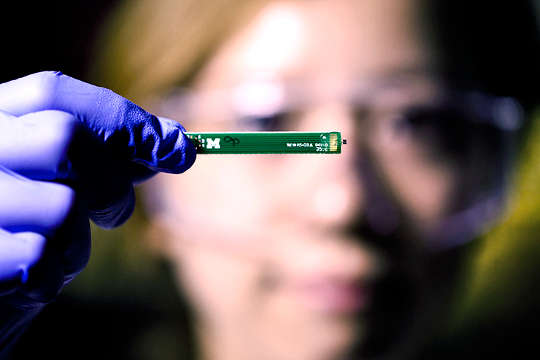 A new electronic sensor can monitor water quality in homes or cities, informing residents or officials of the presence of lead in water within nine days—all for around $20.
 Researchers measuring the exposure to pollution inside cars during rush hour commutes have found that the levels of some harmful particulate matter are twice as high as previously believed.

In the hospital waiting room, heart pounding and mind whirring, surrounded by a sea of apprehensive-looking fellow patients, I settled in to wait for my name to be called. Outside the sun was shining on a warm winter’s afternoon...
 Humans began domesticating animals for food over 10,000 years ago, cultivating a close relationship with animals over the following millennia.
 In the United States, nearly 290,000 women died from heart disease in 2013 – that’s about one in every four female deaths.
 It’s fair to say that frozen food has a bit of an image problem. One in three Britons believe it is inferior to fresh food, and 43% say that nothing could persuade them to buy more frozen fare.
 If you have been struggling with self-confidence or simply want to increase you sense of inner power, there is a simple, yet extremely effective martial arts technique that can help you reconnect with your inner brilliance.
 “Doctor, what caused my cancer?” For doctors, this question is often perplexing. Some of the population risk factors are known, but when it comes to specific cases, only assumptions can be made.
The quest for happiness often leads to frustration, as many fail to realize that the...

Reaching sixty can evoke complex emotions, blending relief with ongoing ambition. This...

The quest for life's purpose often leads to unsatisfactory answers. This article...

Have you ever argued over something that wasn't actually said? From cultural differences...

Romantic love is a complex emotion shaped by historical, cultural, and biological...

Imagine going through one of the most physically and emotionally demanding experiences...

Daily actions often conflict with personal beliefs due to past experiences. By utilizing...

Therapists often use dream interpretation to delve into patients' emotions, but true...