
Happiness & Success
Achieving Happiness Through Acceptance of Life
The quest for happiness often leads to frustration, as many fail to realize that the...








 Over the years, citizen scientists have provided vital data and contributed in invaluable ways to various scientific quests. But they’re typically relegated to helping traditional scientists complete tasks the pros don’t have the time or resources to deal with on their own.
 Recently Sandfire Resources, a gold and copper producer based in Western Australia, announced its new solar power plant will soon start powering its DeGrussa mine. By replacing diesel power, the 10-megawatt power station, with 34,000 panels and lithium storage batteries, is expected to reduce the mine’s carbon emissions by 15%.
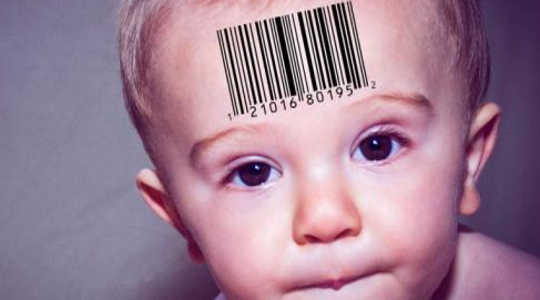 Would you want to alter your future children’s genes to make them smarter, stronger or better-looking?
 The irony of internet freedom was on full display shortly after midnight July 16 in Turkey when President Erdogan used FaceTime and independent TV news to call for public resistance against the military coup that aimed to depose him.
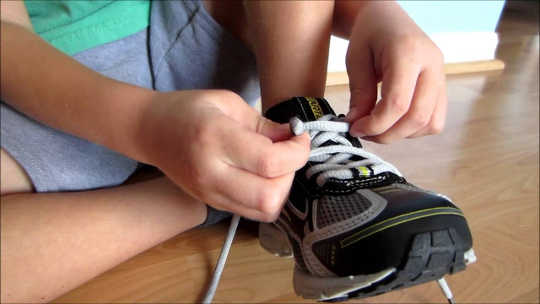 When children learn how to tie their shoelaces, they do so in discrete steps—making a loop or tugging at the lace. After enough repetition, our brain turns these steps into “chunks.”
 Research shows that a student’s genetic makeup can have a strong influence on their academic performance.
 We live, we are so often told, in an information age. It is an era obsessed with space, time and speed, in which social media inculcates virtual lives that run parallel to our “real” lives and in which communications technologies collapse distances around the globe.
 Mobile phone data may reveal an underlying mathematical connection between how we move and how we communicate. This could make it easier to predict how diseases—and even ideas—spread through a population.
 "Our theory explains specifically why primates developed superintelligence but dinosaurs—who faced many of the same environmental pressures and had more time to do so—did not. Dinosaurs matured in eggs, so there was no linking between intelligence and infant immaturity at birth," says Celeste Kidd.
 From the transforming discovery of penicillin to the theories of relativity and quantum mechanics, science progressed with mind-boggling speed even before there were computers. Much of this is down to the robustness of the scientific method: scientific results are validated by being replicated and extended by other scientists.
 In the hours since I first sat down to write this piece, my laptop tells me the National Basketball Association has had to deny that it threatened to cancel its 2017 All-Star Game over a new anti-LGBT law in North Carolina – a story repeated by many news sources including the Associated Press.
 Ask around – everyone has an opinion about their email and their inbox, and it’s not always positive. From information overload, zero inbox and leaked email scandals to the much-hyped triumph of workflow software like Slack and Asana, email has certainly had a bad rap recently.
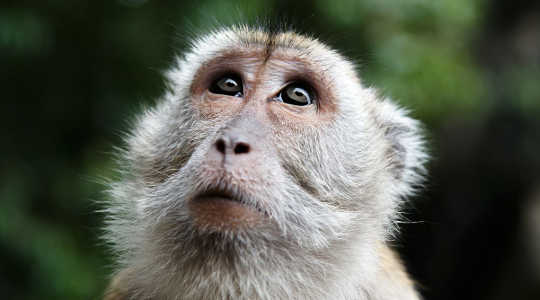 Given its huge success in describing the natural world for the past 150 years, the theory of evolution is remarkably misunderstood. In a recent episode of the Australian series of “I’m a Celebrity Get Me Out of Here”, former cricket star Shane Warne questioned the theory – asking “if humans evolved from monkeys, why haven’t today’s monkeys evolved”?
 Extra, extra! The embargo’s lifted, read all about it. Rumors were flying through the blogosphere this winter: physicists at the Advanced Laser Interferometer Gravitational-Wave Observatory (LIGO) may finally have directly detected gravitational waves, ripples in the fabric of space-time predicted by Einstein 100 years ago in his general theory of relativity. Gravitational waves were predicted to be produced by cataclysmic...
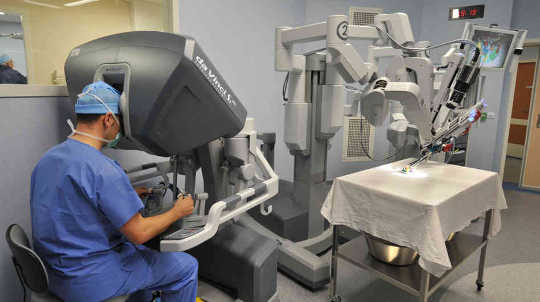 Imagine your child requires a life-saving operation. You enter the hospital and are confronted with a stark choice. Do you take the traditional path with human medical staff, including doctors and nurses, where long-term trials have shown a 90% chance that..
 "The research was just one experiment in a lab," Steve Lohr writes in the New York Times about the study, "but it does point to the larger subject of striking a balance between connectedness and isolation in the digital age."
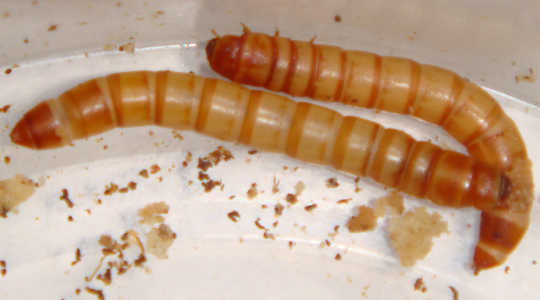 Every year, people in the US throw away 2.5 billion plastic foam cups—and that’s just a fraction of the 33 million tons of plastic that Americans throw out each year.
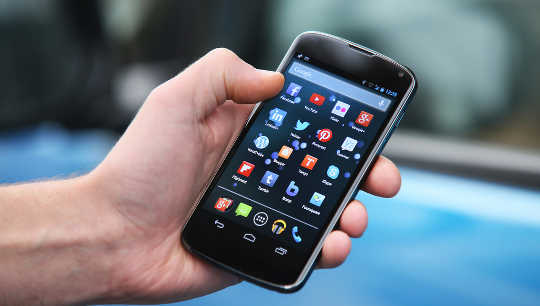 Apps drain 28.9 percent of smartphone battery power while the screen is off, according to the first large-scale study of smartphones in everyday use.
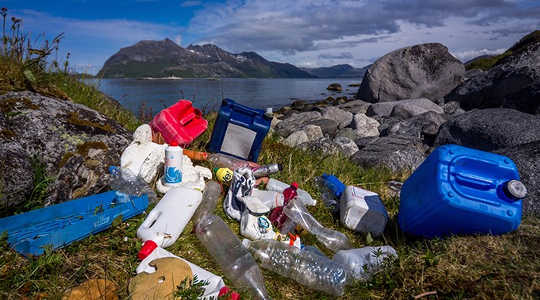 As petroleum-based polymers foul our oceans and litter our lives, researchers seek more environmentally friendly ways to meet demand for durable, versatile materials.
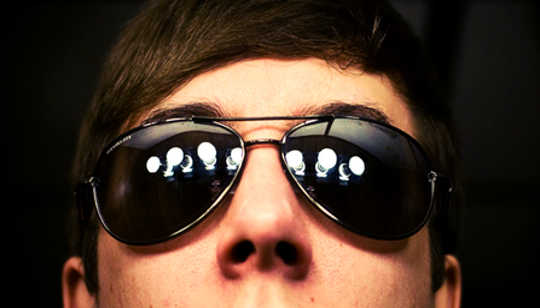 Ever fancied having a superpower? Something you can call upon when you need it, to hand you extra information about the world? OK, it’s not X-ray vision, but your eyes do have abilities that you might not be aware of.
 Fans of homebrewed beer and backyard distilleries already know how to employ yeast to convert sugar into alcohol. Now, bioengineers have gone much further by completing key steps needed to turn sugar-fed yeast into a microbial factory for producing morphine and potentially other drugs, including antibiotics and anti-cancer therapeutics.
The quest for happiness often leads to frustration, as many fail to realize that the...

Reaching sixty can evoke complex emotions, blending relief with ongoing ambition. This...

The quest for life's purpose often leads to unsatisfactory answers. This article...

Romantic love is a complex emotion shaped by historical, cultural, and biological...

Imagine going through one of the most physically and emotionally demanding experiences...

Have you ever argued over something that wasn't actually said? From cultural differences...

Daily actions often conflict with personal beliefs due to past experiences. By utilizing...

Therapists often use dream interpretation to delve into patients' emotions, but true...