Image by Gerd Altmann
Community service plays a crucial role in enhancing personal fulfillment while driving significant societal change. By participating in nonprofit work, individuals like Greg Kemp and Judy Asman exemplify how collective efforts can create lasting impacts, from eradicating diseases to building homes. This article explores the transformative power of volunteering and its potential to shape communities and the world.
In This Article
- What challenges arise in community engagement?
- How do nonprofits effectively contribute to society?
- What methods are used to mobilize volunteers?
- How can individuals apply these lessons in their communities?
- What are the potential risks of volunteering abroad?
Engaging in community service not only enhances personal fulfillment but also drives significant change in society. From eradicating polio to building homes and providing medical care, individuals and organizations demonstrate the power of collective effort. This article explores how meaningful participation in nonprofit work can create lasting impacts on communities and the world.
The world will change when more and more people carve out time from their busy schedules to raise questions, challenge assumptions, set high standards, and pitch in to help each other. The meaning that people find in their work and families will be magnified by the meaning they find as community leaders, public citizens, and volunteers.
People Pitching In to Make Things Better
Millions of Americans find meaning by participating in the daily work of nonprofit organizations. Immense good is being done by tens of thousands of organizations such as the YMCA, Salvation Army, and Catholic Charities, as well as service clubs like Rotary, Lions, Kiwanis, and Exchange. Nonprofit organizations have a public purpose and private flexibility. They are about people pitching in to make things better in our communities. Some have an international impact.
A good example is the polio eradication program launched by Rotary International in 1985. At the time the program started, polio was common throughout the world. Rotary decided to save the world's children from this disease and eradicate polio. Since then, Rotarians and their partner agencies have immunized more than two billion children and reduced polio from 350,000 cases in 1988 to fewer than 1,900 in 2002. It is estimated that more than four million children who might have contracted polio have been saved from the disease.
Rotarians have raised more than $500 million, and many have traveled to other countries to assist directly in distributing the polio vaccine. As a politically neutral nonprofit organization, Rotary International was the perfect vehicle to work on a humanitarian project that crossed national borders. This volunteer effort has had a huge, tangible impact. When they started, Rotarians must have seen the eradication of polio as an overwhelming task. But they decided to make a difference anyway. They are only a few years away from complete victory.
Habitat for Humanity Opens Doors and Hearts
Greg Kemp is a successful real estate developer who volunteers his time to build homes for families in other countries. He says:
It all started when my wife, Annie, and I were traveling by train in mainland China. People along the railroad tracks were huddled late at night around an open fire pit. Their homes were in a garbage dump, built from scrap materials. Seeing them had a big impact on me. What hope do they have? What will happen to their children?
The sight continued to haunt me. A few months later, we were driving near Coeur d'Alene, Idaho, and saw a billboard for Habitat for Humanity. I was curious, so the next day I visited its website. I liked what I saw and immediately signed us up for a Habitat Global Village team that was going to Manukau, New Zealand, an area populated mostly by Maori. We went there and built a home in three weeks. There were eighteen of us, including a judge from New York, a nurse from Alaska, a flight attendant from Florida, a school teacher from Chicago, a retired Episcopalian priest from New Mexico, and an insurance administrator from New Hampshire. The youngest was thirteen, and the oldest was eighty-two.
Next, we signed up for a Habitat Global Village team in the Monteverde cloud forest in Costa Rica. We built two homes in three weeks. We took two teens from the United States and Canada to that project. The teens were in need of a life-changing experience, and they got it.
We travel to areas of the world with disease and strange looking bugs. We might get a clean change of clothes once a week. We get blisters on our hands, and many sore body parts. But there are all those hugs from the local families for whom we are building new homes. We know we have made the world a better place for them to live. We know we have shown people all over the world that we are willing not only to write a check, but to pick up a hammer. I hope that some day, Habitat will be able to build homes for the families along that railroad line in China.
Following Your Heart and Childhood Dreams
 Judy Asman wanted to be a medical missionary ever since she was ten years old and read an article in Reader's Digest about medical missionaries in Ecuador. After a career as a nurse and a hospital administrator, she made her dream come true in 1999, when she joined the Aloha Medical Mission to Laos.
She remembers it vividly:
The mission lasted two weeks, including travel, set up, and five days of surgery. There were thirty-two doctors, nurses, and staff, and each of us donated our time and travel expenses to get there. We went to a small, dirt-road town in northern Laos, to a village with a small, one-story hospital. We brought in some of our own equipment and medicine. Hundreds of people came out of the mountains, lined up, and camped out near the hospital while we were there. They were from tribal clans. We took stuffed animals and toys for the kids to play with while they were waiting. We also took used clothing and bags of school supplies to give away.
We did two days' triage. We tried to find people who needed surgeries that we could perform that would heal while we were there, so they wouldn't need follow-up care after we were gone. We did surgeries on cleft lips, burns, and goiters. The surgeons operated from 7:00 A.M. to 11:00 P.M., because there were so many people who needed help. I did incisions, drainage of abscesses, antibiotics, sutures, postoperative care. In just five days we provided medical and surgical care for over five hundred people. It was totally exhausting and deeply satisfying.
Why did I go? I went to be a caring presence. I wanted the Laotians to know that there are kind and gentle people in the world who care about them, and will come to help them without expecting anything in return. They were such lovely people! They were so gracious, so grateful and giving, even though they were very poor and malnourished. I learned from them. They opened up my eyes to another world.
Working for change may or may not be the road to "success." But it is a road filled with meaning and deep happiness. People who understand that fact will lead the way. They will not be worried about personal success; they will be worried about saving millions of lives and eventually the life of the planet itself.
Raising the Next Generation
In the Earthsea series, Ursula Le Guin chronicles the tale of Ged, the boy who became a wizard and traveled throughout the land, fighting evil. After many adventures, he fought a final battle against a powerful evil. He won, but the battle left him exhausted. He had used up all his magical powers in the cause of good and had become a mere mortal. He started a new life as a goatherd on a hillside in his homeland, living with the woman he loved, raising the child who would become the new wizard. He discovered meaning and satisfaction that he had never known during his years as a "dragon lord" and "archmage."
If we, too, exhaust ourselves in the fight for what is right and good and true, there will be new meaning and satisfaction for us as well. And we can raise the new wizards who will fight the good fight after we are gone.
Satisfaction Lies in the Effort
Gandhi said that "satisfaction lies in the effort, not in the attainment. Full effort is full victory."
The paradoxical life is a life of full effort. You can change the world by loving people, doing good, succeeding, being honest and frank, thinking big, fighting for underdogs, building, helping people, and giving the world your best. You can change the world and find personal meaning and deep happiness at the same time. You can make a difference by just deciding to do it anyway.
Don't wait to make a difference. Do it now.
The world may be crazy, but it doesn't have to be!
Reprinted with permission of the publisher,
New World Library, Novato, CA. ©2008.
www.newworldlibrary.com or 800-972-6657 ext. 52.
Article Source
Do It Anyway: Finding Personal Meaning and Deep Happiness by Living the Paradoxical Commandments
by Kent M. Keith.
 Do It Anyway expands on the vision behind the Paradoxical Commandments. It includes forty stories of people who live the Paradoxical Commandments each day and gives you the examples, tools, and encouragement to find personal meaning and deep happiness, no matter who you are or what your circumstances, even when times are tough.
For More Info or to Order This Book. Also available as a Kindle edition.
About the Author
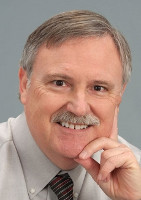 Kent M. Keith is the author of Do It Anyway, Jesus Did it Anyway and Anyway: The Paradoxdical Commandments. He has appeared in national media from Today to the New York Times. A former attorney and university president, he is a popular speaker on finding personal meaning in a chaotic world. His website is www.kentmkeith.com. Visit him also at www.paradoxicalcommandments.com.
Further Reading
-
Anyway: The Paradoxical Commandments: Finding Personal Meaning in a Crazy World
Kent M. Keith presents principles for doing what is right and meaningful even when recognition, gratitude, or success is uncertain. The book emphasizes that personal fulfillment comes from sustained effort, service, integrity, and giving the world one’s best.
Amazon: https://www.amazon.com/exec/obidos/ASIN/0399149457/innerselfcom
-
Doing Good Better: How Effective Altruism Can Help You Help Others, Do Work that Matters, and Make Smarter Choices about Giving Back
William MacAskill explains how evidence and careful reasoning can help people direct their time, careers, and charitable resources toward effective action. His practical framework encourages readers to consider not only the desire to help, but also how their choices can create the greatest lasting benefit.
Amazon: https://www.amazon.com/exec/obidos/ASIN/1592409660/innerselfcom
-
Giving: How Each of Us Can Change the World
Bill Clinton presents examples of individuals and organizations addressing poverty, health, education, disaster relief, and other social challenges. The book illustrates the many ways people can contribute their abilities, resources, and time to improve communities and expand opportunity.
Amazon: https://www.amazon.com/exec/obidos/ASIN/0307266745/innerselfcom
Article Recap
Engaging in community service not only enhances personal fulfillment but also fosters significant societal change. Individuals are encouraged to take action and participate in nonprofit efforts to create a positive impact.
#InnerSelfcom #CommunityService #NonprofitImpact #Volunteerism #SocialChange #GlobalHealth