
Happiness & Success
Achieving Happiness Through Acceptance of Life
The quest for happiness often leads to frustration, as many fail to realize that the...








 Income inequality in the United States has been a major flashpoint during the 2016 presidential election, with much debate focused on whether America is divided between “the 1 percent” who make up the wealthy elite and the lagging middle and working classes.
 Despite appearances to the contrary, this year’s presidential follies have managed to feature at least a few policy discussions amid all the name-calling. Income inequality in particular has animated voters on both sides of the partisan divide, but the solutions advocated by candidates from each party are markedly different.
 The tax cuts for the rich proposed by the two leading Republican candidates for the presidency – Donald Trump and Ted Cruz – are larger, as a proportion of the government budget and the total economy, than any tax cuts ever before proposed in history.
 In 1983, the National Commission on Excellence in Education published A Nation At Risk: The Imperative for Educational Reform, which documented widespread academic underachievement at every level, concluding:
 The association between life expectancy and postcodes, neighbourhood locations or train stations has been demonstrated in many different locations around the world. These include London and Glasgow in the UK and across the US including California.
 The last few years have seen numerous studies pointing to a bleak future with technology-induced unemployment on the rise. For example, a pivotal 2013 study by researchers at the University of Oxford found that of 702 unique job types in the United States economy, around 47% were at high risk of computerisation.
 If the U.S. moved to electric vehicles, there would be a substantial cut in air pollution – and health benefits to go with it.In Paris late last year, the countries of the world pledged to reduce emissions to keep global warming “well below a 2 degree Celsius” rise in global average temperatures compared with preindustrial levels.
 Demand for innovation is at an all-time high. Innovation is now recognized as being key to economic growth strategies in the United States, Canada and countries in the European Union.

These south side Chicago “explorers” had never seen anything comparable to the legendary Union League Club. The esoteric artwork, luxurious decor, and dapper club members were a far cry from the neighborhood where the group of African American teenagers grew up. And there was no mistaking the reaction on members’ faces: There goes the neighborhood.
 America’s children are starting to recover from the worst effects of the Great Recession, although some ill effects remain, a comprehensive study on child well-being reports.
 Intelligent machines are good at some jobs that were once done by humans. Recent alarmist headlines this week claim artificial intelligence (AI) will put half of us out of work.
 Classrooms are becoming more diverse. So, why is music education focused on Western music?
 Health disparities are common in developed countries, including the United States, but at what age those inequities take root and how they vary between countries is less clear.
 A public health researcher explains why life expectancy in the United States is falling, and it has to do with income inequality rising.
 The next Administration should make reducing work time a major focus. In addition to mandated paid sick days and paid family leave — proposals that have received some welcome attention thus far on the presidential campaign trail — policymakers should go much further and enact measures aimed at shortening workweeks and work years.

Increasing poor families’ income can significantly improve their children’s psychological well-being, according to new research.
 Women cardiologists often earn less than men—even when taking into account the different types of work they do—a new study suggests. Further, the ranks of women cardiologists remain disproportionally small compared to those in medicine overall.
 A "Jubilee" initiative in Cincinnati aims to wipe out the debts of the city's poorest people. Theologian Walter Brueggemann explains the idea's biblical foundations.
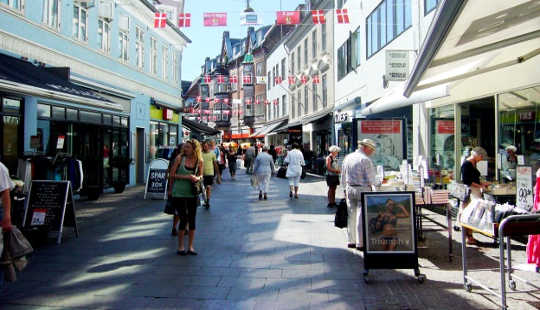 No doubt surprising many of the people watching the Democratic presidential debate, Bernie Sanders cited Denmark as a role model for how to help working people. Hillary Clinton demurred slightly, declaring that “we are not Denmark,” but agreed that Denmark is an inspiring example.
 The Supreme Court twisted a 1925 law to undermine the interests of citizens, employees and small business. Companies, of course, hire arbitration firms that rule in favor of companies.
 Pope Francis’ revolutionary encyclical addresses not just climate change but the banking crisis. Interestingly, the solution to that crisis may have been modeled in the Middle Ages by Franciscan monks following the Saint from whom the Pope took his name.
The quest for happiness often leads to frustration, as many fail to realize that the...

Reaching sixty can evoke complex emotions, blending relief with ongoing ambition. This...

The quest for life's purpose often leads to unsatisfactory answers. This article...

Romantic love is a complex emotion shaped by historical, cultural, and biological...

Imagine going through one of the most physically and emotionally demanding experiences...

Daily actions often conflict with personal beliefs due to past experiences. By utilizing...

Have you ever argued over something that wasn't actually said? From cultural differences...

Therapists often use dream interpretation to delve into patients' emotions, but true...