
Happiness & Success
Achieving Happiness Through Acceptance of Life
The quest for happiness often leads to frustration, as many fail to realize that the...









Since June 30 2014, all UK employees have been granted the right to request flexible working. It is clearly an important step in the battle to achieve some form of balance between our work and non-work lives, but it looks like a tricky battle. Research still shows that there are gaps between the idealised outcomes and realities...

Many people nearing retirement saw much of their savings disappear as the stock market collapsed, house prices plummeted and they lost their jobs during their peak savings years. This meant that millions of workers had to draw down their savings at a point where they had planned to be accumulating wealth for retirement.

Involuntary part-time employment has fallen by 670,000 over the last year, however it's still up by almost 3 million from its pre-recession level. While there would seem to be a very simple and obvious explanation for this one -- weak demand in the economy -- you can't employ many people saying the obvious. Hence we see a lot of nonsense in the media on the topic.
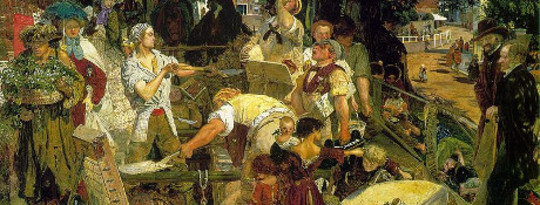
In the 4th century BC, Athens and nine other Greek city states defaulted on their loans from the Temple of Apollo at Delos. It was the first recorded financial crisis. Nearly 25 centuries of human evolution, progress and technological advancement later, the modern nation of Greece defaulted in 2012 as a sovereign debt panic seized Europe.

Has the United States finally reached peak sprawl? Recent research, including a new study out of the George Washington University School of Business, suggests that the end of the era of automobile-oriented suburban growth is upon us.

Having poor people in the richest country in the world is a choice. We have the money to solve this. But do we have the will? Inequality and poverty are suddenly hot topics, not only in the United States but also across the globe.
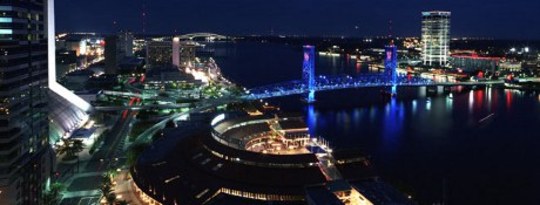
Recently we have seen, at the level of city government, all around policies designed to build community wealth and encourage the growth of cooperative local economies. The work of grassroots developers, local foundations, community activists, and field builders is beginning to gain a foothold in the world of municipal policy...

Cooperative Home Care Associates has 2,300 workers who enjoy good wages, regular hours, and family health insurance. With an investment of $1.2 million into the cooperative sector, New York City is hoping to build on the group's success.

The summer employment rate for U.S. teens held steady at around 50% from 1950 to 2000, but began to decline dramatically in the 21st century. By 2009, it had fallen below 33%. The decline has been most pronounced for more educated and economically advantaged teens.

The United States Postal Service (USPS) management just ran into a possible game-changing obstacle to its shameful pursuit of a fully privatized post office: labor solidarity.

Over the past two decades, the amount of money a college student must borrow to pay for their education has doubled. The graduates of 2014 now sit at the top of the class in student debt. Tuition fees have risen dramatically as household incomes have stagnated, at best, causing some 70 percent of students to fund their higher educations through loans.

Throughout history, local currencies have been used not only as a way to survive during periods of economic uncertainty, but also as a bold way to opt out of a global monetary system that many find exclusionary and, in some cases, corrupt. The only thing that gives modern money value is the fact that...

In Missouri thousands of independent small and mid-size family hog farmers have gone out of business because they don’t have access to a fair market. “Because of massive corporate control of the market, we’ve lost 91 percent of hog producers in Missouri since 1985. That’s over 20,000 farmers and many, many jobs in our rural communities.”

Thomas Piketty's "Capital In The 21st Century" is certainly the the biggest economic book sold in this century, having reached # 1 book status on Amazon. It may also be the most important book. No doubt it will become the book some in the "money class" most love to hate.

The fact that McDonald’s can consistently sell a Bacon McDouble burger for a dollar seems preposterous; it’s a wonder we have a large-scale meat industry at all, much less a highly profitable one.

For centuries, coastal wetlands were considered worthless. A mounting body of research is demonstrating that coastal habitats are vital, valuable components of healthy coastal communities and economies. It’s time to acknowledge the environmental and economic value of restoring these ecosystems...

Though it’s certainly easier to find local, sustainably grown meat and produce in America than it was 20 years ago, the deck nevertheless remains stacked against small farmers and sellers who would feed the steadily increasing demand for such fare. Many of our food-production system’s most dangerous and unsustainable practices...

In a way, nothing could be simpler. I can still hear Carol Peppe Hewitt saying at a Slow Money national gathering: “It really isn’t complicated. There are local food entrepreneurs who need money and local investors looking for good places to put their money. We just need to connect them.”

As far as Mark Dimondstein is concerned, the members of the Postal Workers are going to be out in the streets even more than they already are. Their causes? Increasing revenues for the Postal Service, stopping its creeping privatization, via Staples stores, by the Postmaster General

Your instincts may be telling you otherwise, but the global economy will be strengthening in 2014, according to two major reports released in recent weeks. In an improvement over 2013’s global economic growth of 2.1 percent, we will see a 3 percent rise this year and a bump up to 3.3 percent in 2015...
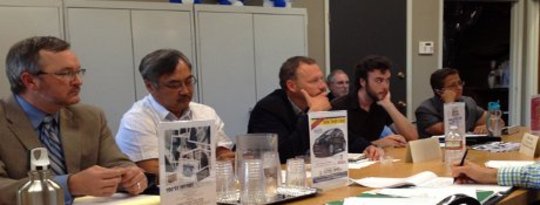
Last year, when Maryland lawmakers refused to act on bills to raise the state’s minimum wage to $10, Prince Georges and Montgomery Counties joined the District of Columbia to create the first regional minimum wage compact at $11.50 an hour
The quest for happiness often leads to frustration, as many fail to realize that the...

Reaching sixty can evoke complex emotions, blending relief with ongoing ambition. This...

The quest for life's purpose often leads to unsatisfactory answers. This article...

Romantic love is a complex emotion shaped by historical, cultural, and biological...

Imagine going through one of the most physically and emotionally demanding experiences...

Have you ever argued over something that wasn't actually said? From cultural differences...

Daily actions often conflict with personal beliefs due to past experiences. By utilizing...

Therapists often use dream interpretation to delve into patients' emotions, but true...