Half of the world’s people already live in urban areas, and that number will only grow in the future. Is this bad news for biodiversity? Not necessarily.
As urban populations rise, cities can still support biodiversity, especially pollinators like bees. By managing urban green spaces effectively, such as community gardens and flower beds, cities can become thriving habitats for various insect species. This approach not only benefits biodiversity but also enhances urban residents' well-being.
In This Article
- Is urbanization harmful to biodiversity?
- What strategies boost urban pollinator populations?
- How do community gardens support urban wildlife?
- What practical changes can enhance urban green spaces?
- What are the risks of neglecting urban biodiversity?
Half of the world’s people already live in urban areas, and that number will only grow in the future. Is this bad news for biodiversity? Not necessarily. Towns and cities can be home to a surprising amount of wildlife – if they’re managed appropriately.
Pollinating insects help provide many of the delicious foods that city dwellers take for granted, but in Britain alone, a third of wild bee and hoverfly species are in decline. While most people want to “save the bees”, few realise that these vital pollinators can thrive in the concrete sprawl outside their window. Studies have found that in some urban areas, there are more bee species than in nearby countryside. So what’s the secret to having a city buzzing with insect life?
In a new study, researchers have unveiled a “Plan Bee” for boosting biodiversity in the midst of city life.
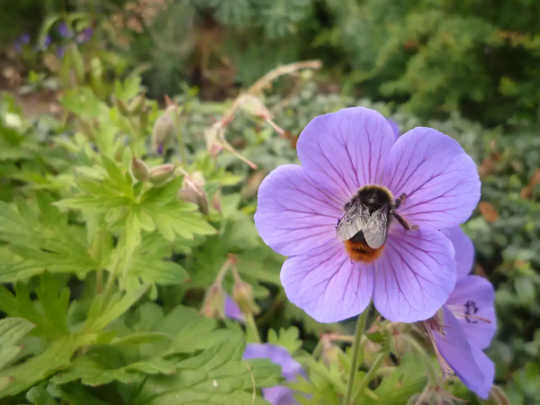 Bumblebees can take to city life if urban green spaces are properly managed. Katherine Baldock, Author provided
Creating a buzz
The researchers created identical flower beds in parks and other public green spaces in the German city of Aachen, and replicated these in a nearby rural area. They watched for the bees, bumblebees, wasps and other insects that arrived and compared their diversity between the two.
These beds included a combination of flowers that were likely to attract a diverse range of species, from black-eyed Susan, a flower that appeals to a wide variety of pollinators, to snapdragons which are favoured by bumblebees. Insects which live in colonies, like honeybees and bumblebees, were recorded less often in the flower beds than expected. These species often forage over several kilometres, but they will only do so if there is lots of nectar and pollen to make it worth the effort.
So what does this tell us about what makes a good urban site for pollinators? In Aachen, most of the urban flower beds attracted fewer insects than those placed in rural areas. The exception to this was the community gardens – what we’d call allotments in the UK. These places often had comparable numbers of pollinator visitors to the rural site.
This tells a similar story to another study which looked at the UK and found that allotment gardens can be hotspots for pollinators – veritable oases within towns and cities.
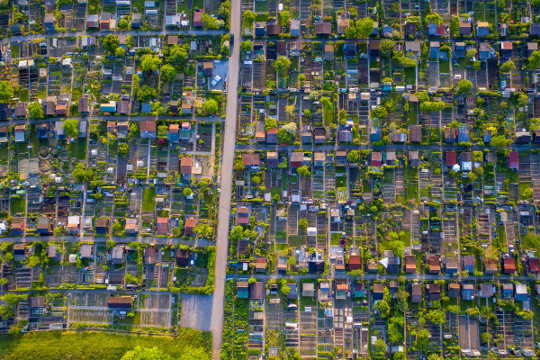 Allotments offer vital pollinator habitats that can be woven into the heart of urban life. Patrick Federi/Unsplash, CC BY
Why are food growing community gardens such valuable habitats for urban biodiversity? An obvious answer is that the wide variety of fruiting plants and herbs commonly found in these allotments provides an abundance of food for pollinators.
But the authors of the Aachen study suggest something else about these sites may be equally important. That is, the “near-natural” patches that can be found in corners of community gardens where native plants creep in and only low-key management – without pesticides or herbicides, and mowing only twice a year – is used. These are important for nesting sites and for providing food plants for insect larvae to eat.
More research is needed to understand how urban habitats can benefit pollinators throughout their entire lifecycles. But we know that taking care of urban pollinators means more than just providing flowers. It means leaving space for native plants to flourish, providing food for insect larvae and a diverse range of nesting and breeding habitat.
Making room for nature
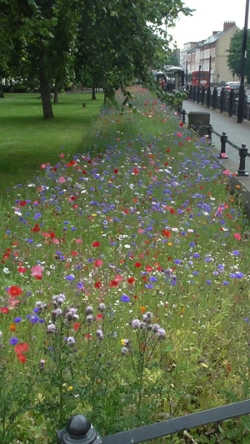 A roadside wildflower strip in Newcastle-Upon-Tyne, UK. Rinke Vinkenoog, Author provided
Urban areas cover 8% of the UK’s land area, and they’re expanding, placing increasing pressure on urban green spaces. We need to ensure that important habitats for wildlife aren’t squeezed out with it, particularly in the post-pandemic rush to stimulate the economy.
Managing green spaces for the benefit of wildlife in towns and cities won’t be enough to arrest declines for all insects, but the small changes we can make on balconies, in yards and gardens, and in allotments, cemeteries and parks can make a meaningful difference. People should consider planting flowers with a range of shapes and colours, and ensure that flowers are available to provide nectar and pollen from spring through to autumn.
Urban land managers should mow parks, road verges and other grassland less frequently to give wildflowers a chance to bloom. Creating urban flower meadows can also provide important food and habitat for pollinators. Not only will these changes enhance pollination of plants in flower beds and vegetable patches, but there is increasing evidence that sharing our green spaces with pollinators like butterflies can improve our psychological wellbeing.
The COVID-19 lockdown has emphasised the value of our local green spaces, especially for those who can’t access a private garden. We should ponder whether a return to intensively mowing them is really necessary, particularly if we want to maximise what bees, and other pollinating insects, need from us in our towns and cities.
About The Author
Rinke Vinkenoog, Senior Lecturer in Biology, Northumbria University, Newcastle; Katherine Baldock, Senior Lecturer in Ecology, Northumbria University, Northumbria University, Newcastle; Mark Goddard, Research Fellow in Urban Ecology, Northumbria University, Newcastle, and Matthew Pound, Senior lecturer in Physical Geography, Northumbria University, Newcastle
This article is republished from The Conversation under a Creative Commons license. Read the original article.
Further Reading
-
Nature's Best Hope: A New Approach to Conservation That Starts in Your Yard
This book explains how homeowners, gardeners, and communities can transform even small urban spaces into thriving habitats for pollinators and wildlife. It offers practical strategies for replacing traditional lawns with native plants that support biodiversity and strengthen local ecosystems.
Amazon: https://www.amazon.com/exec/obidos/ASIN/1604699000/innerselfcom
-
Bringing Nature Home: How You Can Sustain Wildlife with Native Plants, Updated and Expanded
This influential guide explores the essential relationship between native plants, insects, birds, and healthy ecosystems. It demonstrates how gardens, parks, and urban landscapes can become important refuges for pollinators by emphasizing ecological gardening practices.
Amazon: https://www.amazon.com/exec/obidos/ASIN/0881929921/innerselfcom
-
The Bee-Friendly Garden: Design an Abundant, Flower-Filled Yard that Nurtures Bees and Supports Biodiversity
This book provides practical advice for creating gardens that attract bees, butterflies, and other beneficial insects throughout the growing season. Its recommendations complement the article's message that thoughtfully managed urban green spaces can become vibrant sanctuaries for pollinators.
Amazon: https://www.amazon.com/exec/obidos/ASIN/1607746808/innerselfcom
Article Recap
Cities can nurture biodiversity by managing green spaces thoughtfully, particularly through community gardens. Urban planners and residents should prioritize diverse planting and reduced mowing to support pollinators effectively.
#InnerSelfcom #UrbanBiodiversity #PollinatorConservation #CommunityGardens #SustainableCities #GreenSpaces