















# Transforming Your Relationship with Adversity: A Guide to Resilience and Inner Strength
Discover how to fundamentally reshape your response to life's challenges and transform persistent patterns of defeat into pathways of empowerment. This groundbreaking exploration into the psychology of resilience reveals that your ability to overcome adversity is not fixed at birth but rather a skill that can be developed, refined, and mastered through understanding and practice.
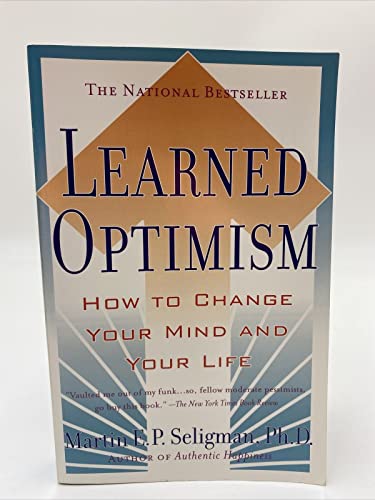
At the heart of this work lies a revolutionary concept: the way you explain events to yourself determines whether you will rise above difficulties or succumb to them. Most people operate within habitual patterns of thinking about failure, rejection, and hardship that were often learned in childhood and reinforced throughout life. These interpretive patterns become invisible to us, operating like automatic software in the background of our consciousness. Yet they profoundly shape our emotional responses, our motivation, and ultimately our success or failure in virtually every area of life.
The research presented here draws from decades of scientific investigation into how people respond to adversity. Through compelling case studies, personal narratives, and practical research findings, you'll encounter individuals who faced seemingly insurmountable obstacles and transformed them into catalysts for growth. Whether dealing with professional setbacks, relationship challenges, health crises, or personal disappointments, the principles explored here apply universally to the human experience of struggle and recovery.
A central revelation concerns the explanatory styles we develop—the habitual ways we account for why things happen. Some people tend toward a permanent, pervasive, and personal interpretation of bad events, seeing setbacks as unchangeable reflections of their fundamental inadequacy. Others develop a more flexible, bounded, and external perspective that allows them to weather difficulties and maintain hope. This distinction matters enormously. Those who interpret adversity through a resilient lens maintain motivation, creativity, and emotional equilibrium even when circumstances are challenging. Those trapped in rigid, pessimistic explanations lose these capacities and become vulnerable to learned helplessness—a state where repeated disappointments create a sense of powerlessness that extends far beyond the original situation.
What makes this exploration particularly valuable is its practical orientation. Rather than remaining in the realm of theory, it offers concrete, actionable techniques for identifying your habitual thought patterns and deliberately shifting them. You'll learn how to recognize the specific thinking habits that undermine you, trace them to their origins, and practice new ways of interpreting events that are both more accurate and more constructive. These aren't mere positive affirmations or denial of real problems. Instead, they represent a more sophisticated, nuanced, and ultimately more realistic way of understanding what happens to you.
The applications extend across every domain of life. In your career, learning to interpret setbacks as temporary rather than permanent can mean the difference between pursuing ambitious goals and settling for less. In relationships, understanding how explanatory styles affect communication and conflict resolution can transform chronic patterns of disconnection into deeper intimacy. In your physical health, research increasingly shows that your psychological resilience and interpretation of stress significantly influence your immune function and overall wellbeing. Even in parenting and education, these principles prove invaluable for fostering children's capacity to persist through challenges.
Beyond individual transformation, this material touches on something larger: the role of hope, agency, and realistic optimism in creating a meaningful life. This isn't about denying pain or pretending difficulties don't matter. Rather, it's about recovering your fundamental capacity to respond creatively to whatever circumstances you face. It's about reclaiming your power.
This transformation begins with awareness and continues through deliberate practice. As you engage with these concepts and techniques, you'll notice subtle shifts in how you talk to yourself, how you respond to setbacks, and how you maintain motivation and meaning even during difficult periods. These shifts accumulate, eventually reshaping not just individual moments but your entire relationship with life's inevitable adversities, revealing them as opportunities for deepening your resilience and discovering capabilities you didn't know you possessed.