


















Spirituality and social action have long been viewed as distinct paths, yet this groundbreaking exploration reveals how deeply intertwined they truly are. Discover how nineteenth-century American Protestants transformed religious devotion into one of the most powerful forces for social change, creating the blueprint for modern humanitarian movements that continue to shape our world today.
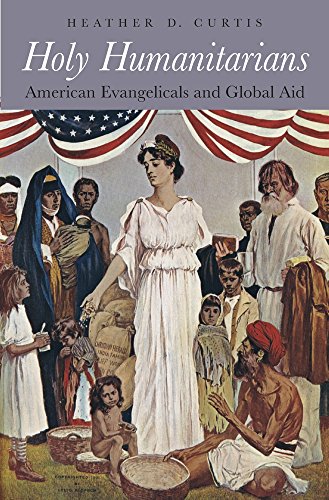
At the heart of this examination is a profound question: What happens when religious faith becomes the driving force behind efforts to reduce human suffering? The answer takes readers on a fascinating journey through the nineteenth century, when evangelical Protestant women and men began to see caring for the poor, sick, and marginalized not merely as charitable duty, but as a sacred calling. These individuals believed that serving humanity was, in essence, serving God. They didn't compartmentalize their spiritual lives from their practical work in the world. Instead, they merged these dimensions into what they understood as holy service.
This perspective proved revolutionary. Rather than waiting for an afterlife to experience redemption, these devoted individuals sought to create heaven on earth through their active engagement with human suffering. They built hospitals, established orphanages, organized relief efforts for disaster victims, and created institutions dedicated to transforming the conditions that perpetuated poverty and disease. In doing so, they laid the groundwork for modern social work, public health initiatives, and organized humanitarian response systems that function today largely invisible to their religious roots.
Readers will discover how predominantly female networks of religious activists mobilized enormous resources and influence during a period when women had limited formal political power. These women developed sophisticated organizational strategies, fundraising techniques, and advocacy methods that would later be adopted by secular organizations. They understood how to harness media attention, build coalitions, and sustain momentum for long-term social change. Their spiritual conviction gave them a resilience and moral clarity that enabled them to persist in face of tremendous obstacles.
The narrative also explores the complex relationship between faith and works, between spiritual motivation and practical outcome. These humanitarians grappled with profound theological questions: Could good works save souls? Should charitable action focus on converting people to their faith, or should service be offered unconditionally? How should they balance immediate relief with long-term systemic change? These questions, which emerged from their sincere spiritual commitments, remain relevant today as modern organizations seek to understand their purpose and impact.
Perhaps most significantly, readers will gain insight into how religious conviction can inspire sustained moral engagement with the world's suffering. In an era when many seek meaning and purpose through spiritual practice, this exploration demonstrates that authentic spirituality has always expressed itself through concrete action. The separation between inner spiritual development and outer social engagement is a relatively modern invention. Throughout history, those most deeply committed to their faith have been those most active in transforming their communities.
Understanding this history provides essential context for anyone interested in social change, activism, or building a more compassionate world. It challenges the assumption that spirituality is primarily an individual pursuit and demonstrates instead how powerful spiritual commitment becomes when channeled toward addressing collective suffering. It shows that the impulse toward humanitarian work is fundamentally spiritual in nature, rooted in the human longing to reduce suffering and honor the dignity of all people.
Whether you're exploring your own spiritual path, considering how to contribute meaningfully to social causes, or seeking to understand the hidden religious foundations of modern institutions, this work offers invaluable perspective. It invites you to reconsider the relationship between your inner spiritual practice and your outer engagement with the world, revealing how the most transformative social movements have always been grounded in deep spiritual conviction.