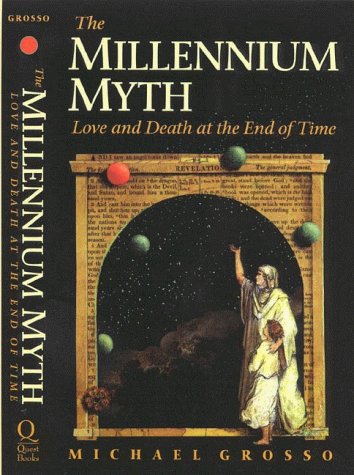














# The Millennium Myth: Unlocking Humanity's Deepest Aspirations and Hidden Potential
At the threshold of a new millennium, humanity faces a profound question: What does the future hold, and what role do our collective beliefs play in shaping it? This exploration delves into one of civilization's most powerful and persistent psychological phenomena—the myth of the millennium itself—and reveals how this archetypal narrative has shaped human consciousness, spirituality, and our understanding of personal transformation across centuries.
The concept of millennialism extends far beyond simple chronological markers or New Year's celebrations. It represents a fundamental human longing for renewal, redemption, and radical transformation. Throughout history, cultures worldwide have projected hopes, fears, and visions of radical change onto transitional moments, particularly those involving the turn of centuries or the completion of thousand-year cycles. These are not merely historical curiosities; they are windows into the deepest dimensions of human psychology and our innate drive toward spiritual evolution and personal empowerment.
By examining the millennium myth, readers gain access to a powerful framework for understanding themselves and their place in the larger human story. The exploration reveals how mythological thinking operates beneath the surface of conscious awareness, influencing our expectations, behaviors, and the possibilities we imagine for ourselves. When we understand how myths function in human consciousness, we unlock the ability to work consciously with them rather than being unconsciously controlled by them.
One of the central insights is recognizing that millennialistic thinking is not pathological or merely superstitious—it reflects genuine intuitions about human potential and evolutionary possibility. Throughout history, visionaries, prophets, and spiritual seekers have sensed genuine transformations on the horizon. The question becomes: How do we distinguish between fantasy and authentic insight? How do we channel our aspirations for transformation toward meaningful personal and collective growth?
The examination of this myth offers practical wisdom for anyone engaged in personal development work. By understanding the psychological architecture of transformational thinking, readers can more effectively navigate their own processes of growth and change. The analysis demonstrates that the impulse toward renewal is not something to dismiss or transcend, but rather something to understand deeply and direct wisely.
The work explores how different spiritual traditions have engaged with millennial thinking—from early Christian apocalypticism to Buddhist conceptions of cosmic cycles to indigenous understandings of great turning points in history. This cross-cultural perspective enriches our understanding and demonstrates that the human yearning for transformation is universal, expressing itself through diverse cultural and religious frameworks.
For those committed to personal empowerment, this exploration proves invaluable. It demonstrates that the desire for transformation is not a weakness or delusion, but a profound calling embedded in human nature. However, this calling becomes truly empowering only when we understand it consciously. By studying how millennialistic thinking has manifested throughout history—sometimes productively, sometimes destructively—we learn to direct our own transformational impulses more effectively.
The investigation also addresses the shadow side of millennial thinking: the tendency toward apocalypticism, despair, and disempowerment. Many individuals caught up in millennial narratives become passive, waiting for external saviors or cataclysmic events to rescue or destroy them. Understanding these patterns helps readers avoid falling into such traps and instead become active agents in creating the future they envision.
What emerges is a sophisticated understanding that our myths are not decorative stories we can ignore. They are active forces shaping reality through our beliefs, expectations, and actions. By bringing conscious awareness to the millennium myth operating within us, we reclaim our power to direct it toward genuine growth, awakening, and contribution to collective evolution. This knowledge transforms us from unconscious participants in mythological narratives into conscious creators of meaningful futures—personally and collectively.