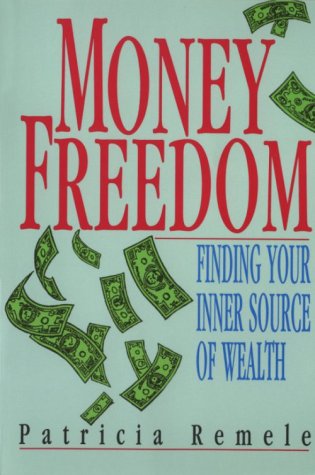



















The relationship between our inner spiritual beliefs and our outer economic reality forms the foundation of personal and societal transformation. Many individuals find themselves trapped in cycles of financial limitation, not because of external circumstances alone, but because of deeply ingrained beliefs about worth, deservingness, and the nature of abundance itself. This exploration examines how shifting our consciousness about money can fundamentally alter our relationship with resources, power, and freedom in ways that ripple through both personal lives and democratic societies.
At its core, this work addresses a critical gap in personal development literature: the intersection of spiritual growth and economic independence. Most self-help resources focus either exclusively on money management techniques or on spiritual enlightenment as though they exist in separate domains. However, anyone seriously committed to personal transformation quickly discovers that financial anxiety, scarcity thinking, and money-related stress directly interfere with spiritual development and emotional wellbeing. Conversely, unexamined spiritual beliefs about money often perpetuate poverty consciousness regardless of actual income levels.
The exploration presents a framework for understanding how cultural programming, family patterns, and social conditioning create invisible barriers to economic empowerment. Readers will discover that many commonly held beliefs about money contain contradictions that sabotage personal prosperity. For instance, many spiritually-oriented individuals unconsciously associate material wealth with spiritual corruption, creating an internal conflict that prevents them from receiving abundance. Similarly, cultural narratives about who deserves financial security often reflect outdated power structures that benefit from keeping certain populations in economic dependence.
Throughout this work, readers encounter practical tools for identifying and transforming limiting beliefs about money and self-worth. The emphasis lies not in simple positive thinking or visualization techniques, but in developing genuine consciousness about the relationship between personal empowerment and economic independence. This deeper work requires honest self-examination about family inheritance patterns, childhood messages about money, and the ways we may have internalized societal limitations as personal truth.
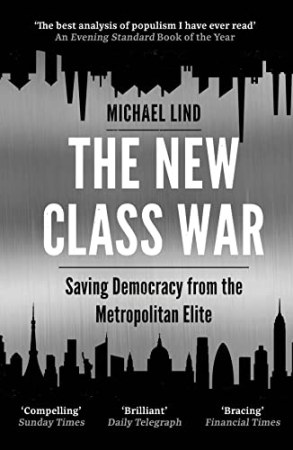
A significant theme involves understanding how personal economic freedom directly connects to democratic participation and social consciousness. When individuals live in constant financial stress and scarcity, their capacity for civic engagement diminishes. Economic anxiety narrows perspective and consumes energy that might otherwise go toward community involvement, informed political participation, and advocacy for social justice. Conversely, those who have achieved a degree of financial stability and freedom possess greater resources, both temporal and psychological, to contribute meaningfully to democratic processes and social transformation.
The work addresses economic empowerment not as selfish individualism but as a prerequisite for genuine social consciousness. Those struggling with basic financial survival face legitimate barriers to considering broader social issues. Yet those who have transcended personal scarcity thinking often discover they naturally develop greater compassion, social awareness, and commitment to systemic change. True democracy requires an informed and engaged citizenry, which becomes possible when individuals are not consumed by survival anxiety.
Readers will also explore how systems of economic power maintain themselves through perpetuating scarcity consciousness in populations. Understanding these mechanisms demystifies seemingly personal financial struggles, revealing structural components that extend far beyond individual effort or merit. This perspective does not diminish personal responsibility but rather contextualizes it within larger systems, enabling more effective action for both personal and collective transformation.
The ultimate purpose of this exploration centers on liberation: freedom from limiting beliefs, freedom from economic anxiety, and freedom to participate fully in both personal purpose and democratic society. Economic empowerment becomes understood as an essential component of spiritual maturity and social consciousness, rather than as something separate from or opposed to spiritual development. By integrating these dimensions, readers gain tools for creating genuinely transformative change in their lives and communities.