














Happiness & Success
Achieving Happiness Through Acceptance of Life
The quest for happiness often leads to frustration, as many fail to realize that the...

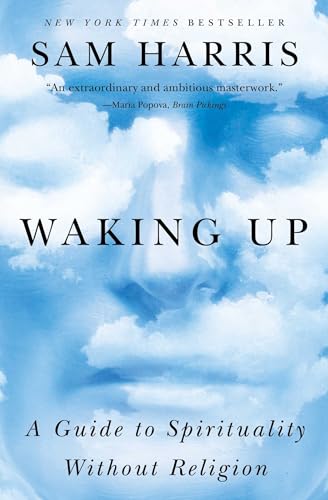
Spirituality doesn't require religion, and the most profound truths about consciousness don't demand faith in the supernatural. This groundbreaking exploration demonstrates how the insights at the core of Buddhism, Vedanta, and other contemplative traditions can be investigated and validated through reason, logic, and direct experience—without any need to embrace unfounded metaphysical beliefs.
For too long, spiritual practice and scientific rationality have been portrayed as incompatible domains. Yet this work bridges that divide with remarkable clarity, showing how meditation and mindfulness aren't merely relaxation techniques or stress-reduction tools, but powerful methods for investigating the nature of consciousness itself. Readers discover that the sense of having a unified, persistent self—the feeling of being a "someone" located behind the eyes—is actually an illusion that can be penetrated through careful introspection.
The exploration begins by examining why the conventional sources of human happiness—wealth, achievement, pleasure, and relationships—inevitably prove unsatisfying in the long run. While these pursuits aren't dismissed as worthless, the fundamental problem with seeking fulfillment through changing external circumstances becomes crystal clear. No matter what we accomplish or acquire, the structure of consciousness remains unchanged, and with it, the potential for dissatisfaction, anxiety, and suffering.
Read more ▼
Wayne W. Dyer

Sheila Hocken

Diana Cooper, Kathy Crosswell
The quest for happiness often leads to frustration, as many fail to realize that the...

Reaching sixty can evoke complex emotions, blending relief with ongoing ambition. This...

The quest for life's purpose often leads to unsatisfactory answers. This article...

Have you ever argued over something that wasn't actually said? From cultural differences...

Romantic love is a complex emotion shaped by historical, cultural, and biological...

Imagine going through one of the most physically and emotionally demanding experiences...

Daily actions often conflict with personal beliefs due to past experiences. By utilizing...

Therapists often use dream interpretation to delve into patients' emotions, but true...