





















Happiness & Success
Achieving Happiness Through Acceptance of Life
The quest for happiness often leads to frustration, as many fail to realize that the...

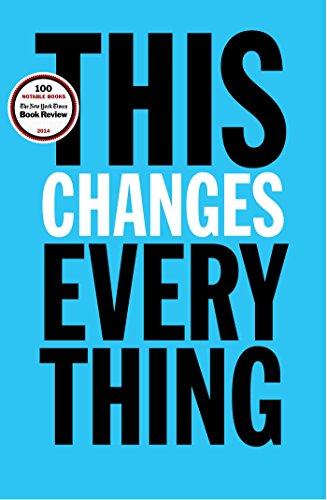
Climate change represents far more than an environmental challenge requiring technical solutions and policy adjustments. It stands as a fundamental wake-up call that exposes the deep flaws in our economic system and presents an unprecedented opportunity to transform society at its roots. This exploration reveals how the climate crisis and our current economic model are locked in an existential battle, and why addressing one requires revolutionizing the other.
At the heart of this analysis lies a provocative thesis: the pursuit of endless growth and maximum profit extraction that defines contemporary capitalism is fundamentally incompatible with a livable climate. The very logic that drives our economy toward constantly expanding production, consumption, and resource exploitation is the same logic pushing our planetary systems toward collapse. Rather than viewing climate change as merely another problem to solve within existing frameworks, readers discover why it demands a complete reimagining of how we organize society, distribute resources, and relate to the natural world.
The examination begins by dismantling the comforting myth that market mechanisms and technological innovation alone can address the climate crisis without disrupting business as usual. Through rigorous investigation of failed carbon trading schemes, ineffective international agreements, and the dangerous allure of geoengineering fantasies, a compelling case emerges that gradualist approaches and faith in unfettered markets have squandered precious decades. The climate emergency requires action at a speed and scale that contradicts the fundamental imperatives of deregulated capitalism.
Read more ▼
What's the matter with Kansas?
Thomas Frank, Mireya Hernández Pozuelo, Slavoj Žižek
Kate Raworth
Eric Klein, John Izzo
The quest for happiness often leads to frustration, as many fail to realize that the...

Reaching sixty can evoke complex emotions, blending relief with ongoing ambition. This...

The quest for life's purpose often leads to unsatisfactory answers. This article...

Romantic love is a complex emotion shaped by historical, cultural, and biological...

Imagine going through one of the most physically and emotionally demanding experiences...

Have you ever argued over something that wasn't actually said? From cultural differences...

Daily actions often conflict with personal beliefs due to past experiences. By utilizing...

Therapists often use dream interpretation to delve into patients' emotions, but true...