
Happiness & Success
Achieving Happiness Through Acceptance of Life
The quest for happiness often leads to frustration, as many fail to realize that the...








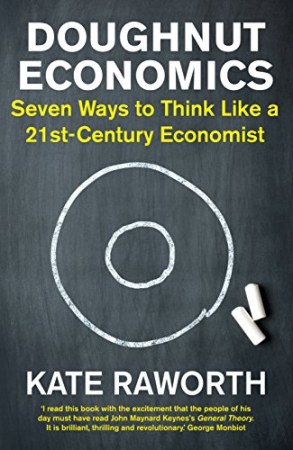
Traditional economic thinking has shaped our world in profound ways, yet it has also led us to a precarious position where planetary boundaries are being breached while billions still lack basic necessities. A revolutionary new framework challenges the fundamental assumptions that have guided economic policy for generations, offering a compass for navigating the complex challenges of the 21st century while honoring both human dignity and ecological limits.
At the heart of this transformative approach lies a simple yet powerful visual metaphor: imagine two concentric circles forming a ring, much like a favorite pastry. The inner circle represents the social foundation, encompassing the essentials that every person needs to lead a life of dignity and opportunity—food, water, healthcare, education, income, political voice, social equity, gender equality, housing, networks, energy, and jobs. The outer circle represents the ecological ceiling, beyond which humanity's collective resource use destabilizes Earth's life-supporting systems through climate change, ocean acidification, chemical pollution, nitrogen and phosphorus loading, freshwater withdrawals, land conversion, biodiversity loss, air pollution, and ozone layer depletion.
Between these two boundaries lies the safe and just space for humanity—a regenerative and distributive economy that meets the needs of all within the means of the planet. This framework fundamentally reframes what economic success looks like, moving beyond the singular obsession with GDP growth that has dominated economic thinking since the mid-20th century.
Read more ▼
Agenda for a New Economy: From Phantom Wealth to Real Wealth
David C. Korten
Naomi Klein
Sahvanna Arienta
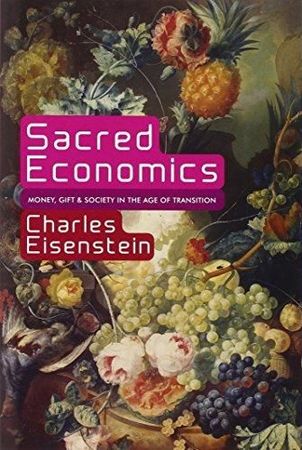
Charles Eisenstein
The quest for happiness often leads to frustration, as many fail to realize that the...

Reaching sixty can evoke complex emotions, blending relief with ongoing ambition. This...

The quest for life's purpose often leads to unsatisfactory answers. This article...

Romantic love is a complex emotion shaped by historical, cultural, and biological...

Imagine going through one of the most physically and emotionally demanding experiences...

Daily actions often conflict with personal beliefs due to past experiences. By utilizing...

Have you ever argued over something that wasn't actually said? From cultural differences...

Therapists often use dream interpretation to delve into patients' emotions, but true...