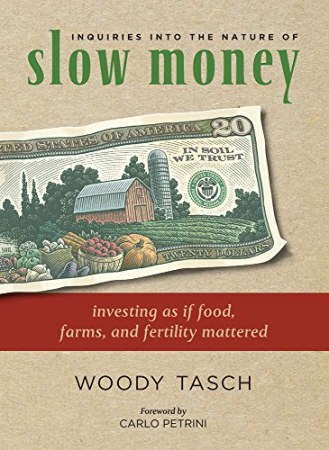












Imagine a world where investment decisions are measured not just in quarterly returns, but in the health of topsoil, the vitality of local communities, and the flourishing of regional food systems. This groundbreaking exploration challenges the very foundations of modern finance by asking a deceptively simple question: What if money moved slower?
For decades, financial markets have celebrated speed—high-frequency trading, instant transactions, rapid capital deployment seeking maximum returns in minimum time. Yet this acceleration has come at tremendous cost to our communities, our environment, and our collective wellbeing. The industrial food system, with its consolidated ownership and global supply chains, exemplifies how fast money has disconnected us from the sources of our sustenance and eroded the relationships that once bound communities together.
This work presents a compelling alternative vision, one where capital flows nurture rather than extract, where investment horizons extend beyond the next earnings report to encompass generations. At its heart lies a profound reimagining of the relationship between money, soil, and soul—recognizing that true wealth emerges not from abstraction and speed, but from patient engagement with place and people.
Readers discover a philosophy of investing that honors the pace of natural systems. Just as a forest cannot be rushed to maturity or soil fertility restored overnight, meaningful economic transformation requires patience, attention, and commitment to long-term thinking. The concept introduced here invites investors to redirect even a small percentage of their assets toward local food enterprises, small farms, and regional food infrastructure. This isn't merely philanthropy or impact investing as typically conceived—it represents a fundamental shift in understanding what creates genuine prosperity.
The pages reveal how our current economic system treats soil, farms, and food as commodities to be exploited for immediate gain, leading to soil depletion, rural decline, and the disappearance of family farms. In contrast, slower capital—money invested with patience and place-consciousness—can rebuild local food economies, restore degraded landscapes, and revitalize communities hollowed out by industrial agriculture's advance.
Through compelling storytelling and rigorous analysis, the exploration demonstrates how everyday people can become agents of transformation by aligning their financial resources with their deepest values. Whether through direct investment in community-supported agriculture, local food enterprises, or regional food hubs, individuals possess far more power than they might imagine to reshape economic reality.
The framework presented extends beyond agriculture to illuminate broader questions about growth, progress, and the good life. What does it mean to be wealthy in a world of depleted soil and declining biodiversity? How do we measure success when conventional metrics ignore ecological and social costs? What responsibility do those with capital bear for the world they're creating through their investment choices?
These inquiries lead to profound personal reflection. Many readers report experiencing a shift in consciousness—recognizing how their own money, often invisibly invested through retirement accounts and mutual funds, may be financing the very systems they find troubling. This awareness becomes a doorway to agency and meaningful action.
The vision articulated here also addresses spiritual hunger endemic in modern society. By reconnecting financial decisions with tangible outcomes—healthy food, thriving farms, resilient communities—investors experience something money's pure abstraction cannot provide: meaningful participation in creation and restoration. There's soul-nourishment in knowing your capital helps a beginning farmer purchase land, supports a local food cooperative, or enables a regional processing facility that keeps value circulating locally.
Perhaps most importantly, this work demonstrates that transformation needn't wait for systemic overhaul or policy change. While acknowledging the need for larger reforms, it empowers readers to begin immediately, starting where they are with what they have. Even modest redirections of capital, multiplied across many individuals, can catalyze significant change in local food systems and beyond.
For those seeking to live with greater integrity and harmony—aligning outer actions with inner values—this exploration offers both philosophical framework and practical pathway. It challenges readers to consider whether their money serves life or diminishes it, and provides tangible means to choose differently.