













Happiness & Success
Achieving Happiness Through Acceptance of Life
The quest for happiness often leads to frustration, as many fail to realize that the...

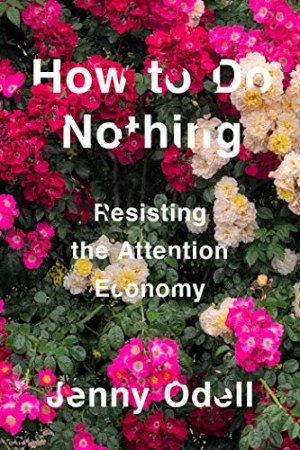
In an era where productivity culture demands our constant attention and digital platforms compete relentlessly for every spare moment of our consciousness, a powerful counter-narrative emerges that challenges the very foundation of our always-on existence. This transformative work presents a radical proposition: that reclaiming our attention from the attention economy is not merely an act of self-care, but a profound political act with far-reaching implications for personal empowerment and social change.
At its core lies a sophisticated examination of what it means to resist the pressures of late capitalism's demand for constant productivity and engagement. Rather than offering simple disconnection or escapism, the exploration goes deeper, questioning the entire framework that measures human worth through output and visibility. Drawing on philosophy, art history, ecology, and cultural criticism, readers encounter a richly textured argument for the revolutionary potential of doing nothing—not as passive withdrawal, but as active, conscious refusal to participate in systems that diminish our humanity.
The journey begins by deconstructing modern assumptions about time, attention, and value. Readers discover how corporations and platforms have systematically colonized our mental space, turning even leisure time into opportunities for data extraction and monetization. This isn't conspiracy theory but careful analysis of business models built on capturing and commodifying human attention. Understanding these mechanisms becomes the first step toward liberation.
Read more ▼
Barbara Hand Clow

Sue Spitler, Linda R. Yoakam

Michael Lerner

Henry Cloud, John Sims Townsend
The quest for happiness often leads to frustration, as many fail to realize that the...

Reaching sixty can evoke complex emotions, blending relief with ongoing ambition. This...

The quest for life's purpose often leads to unsatisfactory answers. This article...

Imagine going through one of the most physically and emotionally demanding experiences...

Romantic love is a complex emotion shaped by historical, cultural, and biological...

Daily actions often conflict with personal beliefs due to past experiences. By utilizing...

Have you ever argued over something that wasn't actually said? From cultural differences...

Therapists often use dream interpretation to delve into patients' emotions, but true...