












Happiness & Success
Achieving Happiness Through Acceptance of Life
The quest for happiness often leads to frustration, as many fail to realize that the...


Journey back more than fifty thousand years to discover profound insights about human nature, community, and our place in the natural world. Through meticulous anthropological observation and deeply personal narrative, this work illuminates the lives of the Ju/wa Bushmen of the Kalahari Desert, offering readers a transformative lens through which to examine modern existence and reclaim fundamental aspects of our humanity.
The Ju/wa people, also known as the San, represent one of the oldest continuous human cultures on Earth. Their way of life, largely unchanged for millennia until the mid-twentieth century, offers an extraordinary window into how humans lived for the vast majority of our species' existence. By exploring their traditional practices, social structures, and relationship with the natural world, readers gain access to a blueprint for human thriving that predates agriculture, civilization, and all the complexities of contemporary life.
At the heart of this exploration lies a radical reimagining of what it means to live in harmony with oneself, others, and the environment. The Ju/wa maintained a culture virtually free of violence, hierarchy, and material accumulation. Their egalitarian society functioned without formal leadership, without wealth disparities, and without the psychological burdens that plague modern existence. Understanding how they achieved this offers profound lessons for anyone seeking to navigate the stresses and disconnections of contemporary life.
Read more ▼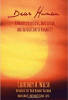
Courtney A. Walsh

Lundy Bancroft

Hubert Selby, Jr.
The quest for happiness often leads to frustration, as many fail to realize that the...

Reaching sixty can evoke complex emotions, blending relief with ongoing ambition. This...

The quest for life's purpose often leads to unsatisfactory answers. This article...

Imagine going through one of the most physically and emotionally demanding experiences...

Romantic love is a complex emotion shaped by historical, cultural, and biological...

Daily actions often conflict with personal beliefs due to past experiences. By utilizing...

Have you ever argued over something that wasn't actually said? From cultural differences...

Therapists often use dream interpretation to delve into patients' emotions, but true...