
Happiness & Success
Achieving Happiness Through Acceptance of Life
The quest for happiness often leads to frustration, as many fail to realize that the...









We all know someone who can't admit when they're wrong. Perhaps we've watched a friend double down on a bad decision, a family member refuse to acknowledge their mistakes, or a public figure spin increasingly elaborate justifications for their actions. But here's the uncomfortable truth: we're all that person. The gap between our behavior and our beliefs, between what we do and what we think we stand for, creates a psychological tension that shapes our lives in profound and often invisible ways.
This exploration into the psychology of self-justification reveals how our minds work tirelessly to protect our self-image, often at tremendous cost to our relationships, our growth, and our integrity. Drawing on decades of psychological research and real-world examples from medicine, law, politics, marriage, and everyday life, this work illuminates the mental mechanisms that allow good people to do bad things while sleeping soundly at night.
At the heart of this examination lies cognitive dissonance theory, the revolutionary insight that when our actions conflict with our beliefs, we don't simply acknowledge the contradiction. Instead, our minds automatically work to reduce the discomfort by changing our beliefs to match our behavior. This isn't conscious lying or deliberate deception. It's an unconscious process that feels like arriving at the truth. We convince ourselves that what we did was justified, necessary, or not really that bad. And once we've taken that first step down the pyramid of self-justification, each subsequent step becomes easier, the rationalizations more elaborate, and the distance from our original values greater.
Read more ▼
Wayne W. Dyer

Lynn Picknett, Clive Prince
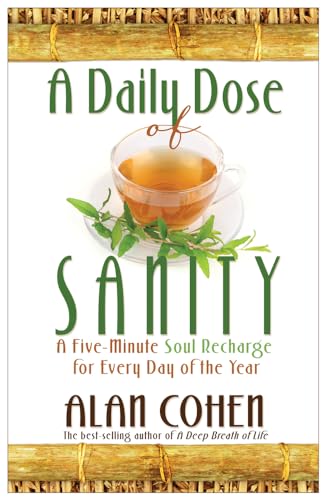
Alan Cohen
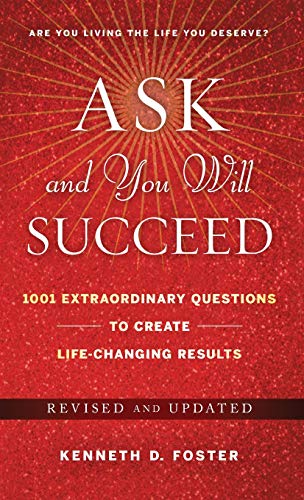
Ken D. Foster
The quest for happiness often leads to frustration, as many fail to realize that the...

Reaching sixty can evoke complex emotions, blending relief with ongoing ambition. This...

The quest for life's purpose often leads to unsatisfactory answers. This article...

Romantic love is a complex emotion shaped by historical, cultural, and biological...

Imagine going through one of the most physically and emotionally demanding experiences...

Daily actions often conflict with personal beliefs due to past experiences. By utilizing...

Have you ever argued over something that wasn't actually said? From cultural differences...

Therapists often use dream interpretation to delve into patients' emotions, but true...