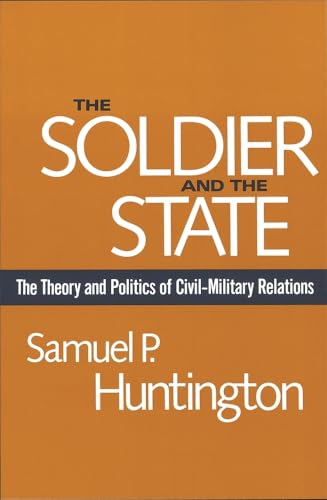
Explore one of the most influential analyses of institutional power structures and their relationship to individual and collective responsibility. This seminal work examines how professional military institutions function within democratic societies and what this relationship reveals about the nature of leadership, duty, and social organization.
At its core, this exploration delves into a fundamental tension that exists in every modern society: how to maintain civilian democratic control while preserving the professional autonomy and expertise of those entrusted with national defense. This balance touches on something deeply personal for each of us—the question of how we structure authority, trust expertise, and maintain integrity within hierarchical systems. Whether you work within institutions, lead teams, or simply navigate complex organizational environments, the principles examined here offer profound insights into power dynamics and ethical leadership.
The work presents a comprehensive examination of military professionalism as a concept distinct from civilian control. Rather than viewing these as opposing forces, the analysis demonstrates how genuine professionalism actually depends upon clear boundaries and mutual respect. A professional military maintains its highest integrity not through rebellion against civilian oversight, but through expert competence and ethical discipline within its defined sphere. This principle extends far beyond military contexts—it speaks to how any expert or specialist should operate within society, balancing specialized knowledge with broader social responsibility.
Readers will discover how institutions develop culture, maintain standards, and preserve mission focus amid competing pressures. The examination of military education, advancement systems, and institutional loyalty provides a window into how any organization can maintain coherence and purpose. For those interested in personal empowerment, understanding institutional dynamics proves essential, as most of us spend significant portions of our lives within organized structures. Recognizing how these systems work, where tensions naturally arise, and how healthy institutions manage conflict provides practical wisdom applicable to corporate environments, nonprofits, educational institutions, and community organizations.
The historical analysis traces how these relationships have evolved, examining different approaches to civil-military relations across various democratic and non-democratic systems. This comparative perspective reveals that no single solution exists, but rather that each society must continually work to maintain an appropriate equilibrium. This insight proves empowering because it suggests that current problems are not insurmountable flaws but rather ongoing challenges requiring thoughtful attention. The same applies to personal growth—recognizing that tension between competing values or roles is natural, rather than evidence of failure, fundamentally shifts how we approach self-development.
Beyond the structural analysis, the work engages with deeper philosophical questions about duty, honor, and professional identity. What does it mean to dedicate oneself to an institution? How do individuals maintain personal integrity while serving larger purposes? What responsibilities do institutions bear toward those who serve them? These questions resonate whether one has military experience or not, as they speak to the universal human challenge of balancing individual autonomy with group membership.
For readers on a personal growth journey, this material offers several valuable benefits. First, it provides intellectual frameworks for understanding power structures you encounter daily, reducing confusion and increasing your agency. Second, it illuminates how institutions can foster ethical behavior through structure and culture rather than relying solely on individual moral choices. Third, it demonstrates that expertise and professionalism are themselves values worthy of respect and protection, even as democratic oversight remains essential.
The work ultimately argues that the health of democratic society depends not on eliminating hierarchy or institutional autonomy, but on creating conditions where professional institutions can serve social needs with integrity while remaining accountable to broader democratic values. This vision of balanced complexity proves more realistic and ultimately more empowering than utopian alternatives that promise seamless harmony.