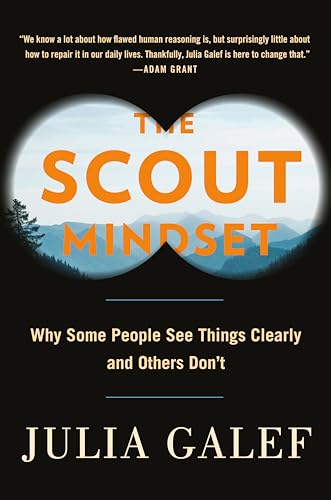
Have you ever noticed how easily we defend our beliefs, even when evidence suggests we might be wrong? Or how quick we are to interpret information in ways that support what we already think? Most of us go through life operating in what might be called a "soldier mindset"—we identify a position and then defend it fiercely. But what if there's a different way of approaching truth, learning, and personal growth?
The distinction between two fundamentally different ways of thinking lies at the heart of personal transformation. One approach treats your beliefs like a fortress that must be protected at all costs. The other treats your thinking like an ongoing investigation, where the goal is to discover what's actually true rather than win arguments or preserve your self-image. This contrast between defensive thinking and exploratory thinking forms the foundation for understanding how we can fundamentally change our relationship with knowledge, growth, and change itself.
The defensive approach—what we might call soldier thinking—causes us to interpret information selectively. When we encounter something that challenges our worldview, we become skeptical and critical. We generate counter-arguments almost automatically. We remember information that supports our existing beliefs while forgetting contradictory evidence. This isn't a character flaw; it's a natural cognitive pattern that everyone falls into. But it comes with a significant cost: it prevents us from updating our beliefs, learning from mistakes, and adapting to new circumstances.
The exploratory approach—or scout thinking—operates on entirely different principles. Here, the goal isn't to defend a position but to understand reality as accurately as possible. When you encounter evidence that challenges your view, instead of becoming defensive, you become curious. You actively look for reasons why you might be wrong. You examine your own beliefs with the same critical eye you'd apply to someone else's arguments. You recognize and work to counteract your natural biases. This mindset opens the door to genuine learning and growth.
The transformation from one way of thinking to another requires understanding the specific cognitive patterns that undermine accuracy. Our brains are remarkably skilled at self-deception. We engage in motivated reasoning, where we unconsciously process information in ways that serve our emotional needs rather than our intellectual ones. We suffer from confirmation bias, actively seeking out information that confirms what we already believe. We rationalize away inconvenient facts. We mistake certainty for accuracy, often feeling most confident about things we actually understand least. Learning to recognize these patterns is the first step toward transcending them.
Practical application of scout thinking extends far beyond abstract philosophy. It transforms how we approach relationships, careers, health decisions, and personal development. When you cultivate this mindset, you become better at recognizing when you're wrong without becoming defensive. You make more effective decisions because you're considering evidence rather than rationalizing predetermined conclusions. You handle disagreements more productively because you're genuinely trying to understand other perspectives rather than refute them. You adapt more easily to change because you're not rigidly attached to previous positions.
The book explores numerous real-world examples that illustrate how this shift in thinking plays out in practice. These examples span professional contexts, personal relationships, and high-stakes situations where clear thinking literally saves lives or prevents disasters. By examining both the failures of defensive thinking and the successes of exploratory thinking, readers gain insight into how they can recognize these patterns in their own lives and consciously choose a different approach.
What makes this exploration particularly valuable is its emphasis on practical, actionable techniques. It's not enough to understand intellectually that scout thinking is superior; you need concrete strategies for actually cultivating it. These include specific questioning techniques, ways to overcome emotional resistance to changing your mind, methods for seeking out diverse perspectives, and approaches to maintaining intellectual humility even in areas where you have genuine expertise.
For anyone committed to personal growth, this mindset shift represents one of the most transformative changes possible. It affects not just what you know, but how you know it. It influences your relationships, your career trajectory, your emotional resilience, and your capacity for continued learning throughout life. In a world of rapid change and abundant information, the ability to think clearly and update your beliefs based on evidence is perhaps the most valuable skill you can develop.