# Understanding the Pathways to Genuine Economic Development and Social Prosperity
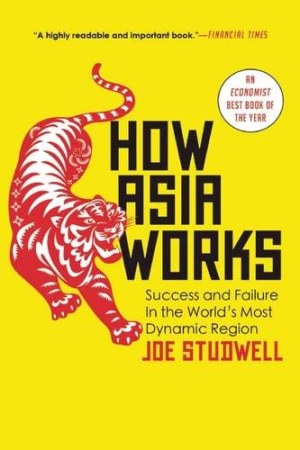
What determines whether a nation develops genuine prosperity or remains trapped in cycles of poverty and inequality? This groundbreaking examination reveals the hidden patterns behind Asia's remarkable economic transformations over the past half-century, offering profound insights into how societies can achieve sustainable development that benefits all citizens.
The exploration begins with a fundamental question: Why have some Asian countries achieved extraordinary economic growth and rising living standards, while others, despite possessing similar resources and potential, have stagnated? The answer lies not in abstract economic theory or the conventional wisdom promoted by international institutions, but in concrete historical patterns and the specific policy choices that have proven effective across different cultural and political contexts.
The narrative unfolds by examining the actual development trajectories of nations including Japan, South Korea, Taiwan, China, and Vietnam—countries that successfully transformed from agrarian societies into modern industrial economies. Simultaneously, it provides cautionary tales from countries like the Philippines and Thailand, which adopted different approaches and consequently experienced less robust development outcomes. This comparative analysis reveals that successful development requires far more than simply opening markets and trusting in free trade. Instead, it demands deliberate government intervention, strategic planning, and policies that prioritize domestic industry and protect emerging manufacturers during critical growth phases.
One of the most valuable insights concerns agricultural foundations. Readers will discover that every successful Asian economy began by investing heavily in rural development and land reform. This investment wasn't merely humanitarian—it was economically strategic. By creating a broad base of prosperous farmers, these nations generated the domestic demand necessary to sustain industrial growth, created savings that could fund investment, and built social cohesion that enabled cooperation between government and business. This model contrasts sharply with approaches that neglect rural development while rushing to create manufacturing sectors.
The exploration then moves into manufacturing development, where readers encounter the concept of deliberate developmental sequencing. Successful Asian nations didn't attempt to compete globally in advanced industries immediately. Instead, they started with relatively simple manufacturing—textiles, basic electronics, simple machinery—protecting these nascent industries from international competition while companies learned, invested in worker training, and gradually upgraded their capabilities. Only after building strong domestic industries did these nations gradually expose them to competition and move toward more sophisticated manufacturing.
A particularly illuminating section examines the role of state institutions and the relationship between government and business. Rather than viewing government and free markets as opposites, successful Asian development combined strong state capacity with market mechanisms. Governments weren't corrupt or chaotic—they were competent, focused on long-term development, and willing to dismiss businesses that didn't meet performance standards. This approach differs fundamentally from both pure state planning and laissez-faire capitalism.
For readers seeking to understand how societies can transform and create conditions where ordinary people experience improving living standards, this perspective is transformative. It challenges the idea that prosperity somehow flows automatically from opening borders or reducing government involvement in the economy. Instead, it demonstrates that sustainable, inclusive development requires conscious choices, strategic thinking, and a commitment to building genuine productive capacity rather than pursuing short-term profits.
The implications extend beyond economics into considerations of social harmony, stability, and justice. Societies that develop through broad-based manufacturing and agriculture experience more equitable distribution of wealth than those that rely on natural resource extraction or financial services. Workers gain skills, dignity through productive employment, and genuine opportunities for advancement. Communities remain intact and vital rather than being hollowed out by economic dislocations.
This comprehensive analysis provides readers with frameworks for understanding not just historical Asian development, but contemporary global economic challenges and possibilities. It demonstrates that different pathways exist, that development can be inclusive rather than extractive, and that the choices nations make regarding agriculture, manufacturing, and the role of strategic planning have profound consequences for human flourishing and social wellbeing.