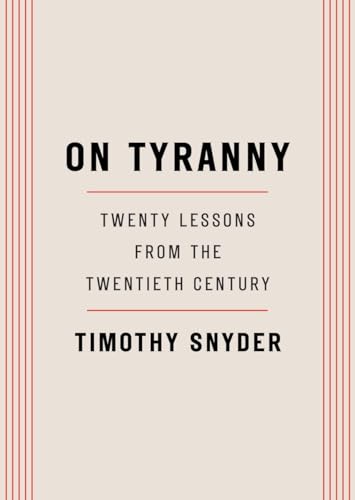




In an era where democratic institutions face unprecedented challenges and authoritarian movements gain momentum worldwide, understanding the warning signs of tyranny has become essential knowledge for anyone committed to personal freedom and social consciousness. This slim but profoundly impactful volume offers twenty practical lessons drawn from the dark history of twentieth-century totalitarianism, making them strikingly relevant to our contemporary moment.
The work emerges from deep scholarly research into the rise of fascism and communism across Europe, yet it speaks directly to citizens of democracies today who may feel powerless in the face of institutional decay and political polarization. Rather than presenting abstract theories or distant historical narratives, the book translates lessons from history into actionable wisdom that individuals can apply to protect their own freedom and contribute to the preservation of democratic life.
Readers will discover how tyranny rarely announces itself through obvious declarations of intent. Instead, authoritarian systems typically establish themselves through subtle erosions of the norms and institutions that protect freedom. The text explores how propaganda, media manipulation, and the exploitation of fear gradually condition populations to accept restrictions they would have previously rejected. Understanding these mechanisms proves invaluable for anyone seeking to maintain their critical thinking and resist manipulation in an age of information warfare and social division.
The lessons cover essential territory for anyone concerned with maintaining a functioning democracy. They address how institutions become vulnerable, how language gets weaponized to alter perception and reality, how history gets rewritten to serve present purposes, and how ordinary citizens can become complicit in their own subjugation. The guidance extends to recognizing when professionals and institutions that should serve as checks on power instead become tools of concentration and control.
What makes this work particularly valuable for those on a personal growth journey is its emphasis on individual agency and responsibility. While the lessons document historical patterns of collapse and corruption, they simultaneously empower readers by demonstrating that resistance and preservation of freedom depend significantly on the choices ordinary people make every day. This transforms the reading experience from one of despair into one of awakened purpose and possibility.
The book addresses practical matters that affect daily life and consciousness. It explores how to maintain one's integrity and independent thought when social pressure pushes toward conformity, how to build genuine community rather than the manufactured unity that tyrannies promote, how to preserve truth and factuality when authorities deliberately distort information, and how to recognize when compromise with authoritarian movements represents a step toward one's own eventual subjugation.
For readers seeking personal and spiritual growth, this work provides essential context for understanding the social structures within which that growth occurs. Freedom of thought, conscience, and expression form the foundation upon which personal development and spiritual exploration depend. When these freedoms erode, the space for authentic self-discovery and transformation shrinks correspondingly. Conversely, actively defending democratic principles and resisting authoritarianism becomes itself a form of spiritual practice rooted in commitment to human dignity and potential.
The historical examples provide sobering but instructive illustrations of how intelligent, educated populations with advanced cultures succumbed to tyrannical rule. This humbling perspective discourages complacency and challenges the assumption that democratic freedoms are permanent or irreversible. Instead, it frames freedom as something requiring constant, conscious maintenance and protection.
This essential guide serves those who recognize that personal transformation and social consciousness remain inseparable. By understanding how tyranny operates and what its early warning signs appear, readers gain both the knowledge and the motivation to become active participants in protecting the democratic conditions upon which freedom and human flourishing depend.