



# Understanding the Modern Crisis of Exhaustion and Finding Your Way Back to Wholeness
We live in an age of unprecedented achievement. By almost every measurable standard, modern society offers opportunities and conveniences that previous generations could scarcely imagine. Yet despite these advantages—or perhaps because of them—we find ourselves more exhausted than ever. The question that haunts contemporary culture is not why we're failing to accomplish enough, but why accomplishing so much leaves us feeling so profoundly empty and depleted.
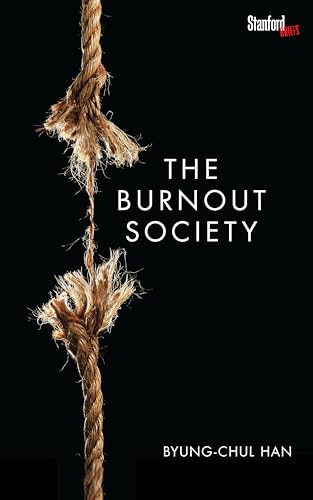
This insightful exploration of burnout delves into the psychological and social roots of our modern exhaustion epidemic. Rather than treating burnout as a personal failure or individual weakness, this work reveals it as a systemic condition embedded in the very structure of contemporary society. The analysis begins with a crucial distinction: the burnout we experience today differs fundamentally from the burnout of previous eras. It is not primarily caused by external demands placed upon us by others, but rather by our internalization of unlimited self-exploitation masked as personal freedom and self-optimization.
At the heart of this examination lies a paradoxical truth about modern work culture. We have transitioned from a society organized around external coercion—where bosses, factory managers, and authorities enforced productivity through direct control—to one organized around self-management and self-motivation. On the surface, this appears to be liberation. We are told we can be our own boss, create our own destiny, and pursue our passions. Yet this freedom comes with a hidden cost. When we become responsible for our own exploitation, when we willingly extend our working hours and internalize the demands of constant productivity, we have become far more efficient instruments of our own depletion than any external force could ever achieve.
The text explores how achievement-oriented culture has metastasized throughout every dimension of human experience. Work is no longer confined to the office or factory. It has invaded our relationships, our leisure time, our spiritual practices, and even our sleep. We optimize our bodies through fitness regimens, our minds through meditation apps and self-help resources, and our social connections through strategic networking. Every moment becomes an opportunity for self-improvement and self-marketing. This relentless drive toward perpetual enhancement creates a psychological state where we are never at rest, never satisfied, never enough.
What makes this particularly insidious is how thoroughly we have internalized these demands. We do not experience our exhaustion as oppression from external forces, but as the natural consequence of insufficient effort or willpower. When we burn out, we blame ourselves for lacking discipline, resilience, or proper time-management skills. This self-blame prevents us from recognizing the systemic nature of our condition and keeps us trapped in cycles of guilt and self-recrimination.
The exploration of achievement society reveals how our contemporary understanding of freedom has become distorted. We equate freedom with choice, with the ability to pursue unlimited options and possibilities. Yet true freedom also requires the ability to say no, to embrace limitations, and to find meaning beyond constant productivity. The pressure to maximize every aspect of ourselves leaves no room for this deeper form of freedom.
Understanding these dynamics is essential for anyone seeking to reclaim their wellbeing and authenticity in modern life. Recognizing burnout not as a personal failing but as a societal condition opens up new possibilities for transformation. It invites us to question the narratives we have internalized about success, worth, and human flourishing. It challenges us to imagine different ways of organizing our lives and relationships that honor our fundamental need for rest, meaning, and genuine connection.
This perspective offers genuine hope because it shifts the locus of change from individual self-improvement to collective reimagining of our values and priorities.