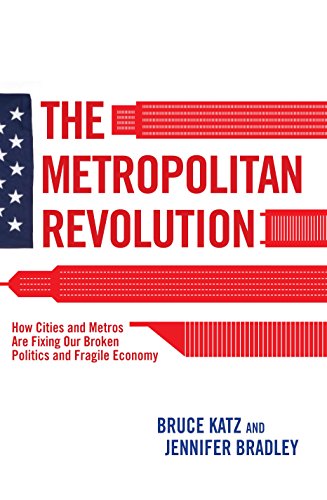
At a time when national politics seems increasingly gridlocked and disconnected from the real needs of everyday people, a compelling vision emerges from an unexpected source: our cities and metropolitan regions. This exploration reveals how local and regional leaders are stepping into the vacuum left by dysfunctional federal systems, creating innovative solutions that actually work and demonstrating that meaningful change is possible when citizens engage at the grassroots level.
The fundamental insight here is both revolutionary and practical: the future of American prosperity and democratic health depends not on Washington, but on the mayors, business leaders, entrepreneurs, and engaged citizens who are reimagining how metropolitan areas function. While national politicians remain deadlocked over ideology and partisan positioning, cities and regions across the country are quietly solving problems that matter most to people's daily lives: creating jobs, improving education, addressing transportation challenges, and building sustainable communities.
This perspective offers profound hope for those seeking meaningful transformation. Rather than accepting that we are trapped by a broken system at the national level, readers will discover that real power to create change exists much closer to home. Metropolitan areas encompassing cities and their surrounding regions have become the true engines of economic innovation and social progress. They are where ideas are tested, proven, and refined before potentially scaling to national significance. They are where democracy still functions in a way that feels responsive and accountable.
The book examines how metropolitan regions are approaching governance differently. Instead of siloed departments working independently, progressive metropolitan areas are integrating transportation, housing, workforce development, and environmental sustainability into coherent regional strategies. Instead of left-versus-right ideology dominating every conversation, these communities focus on pragmatic problem-solving that bridges traditional political divides. A mayor concerned with economic competitiveness discovers she must also address affordable housing. A business leader committed to profitability recognizes that workforce development is essential to success. Teachers understand that sustainable transportation affects school attendance and student performance.
Readers will gain insight into the interconnected nature of modern challenges and solutions. The siloed thinking that has characterized much of American governance for decades is giving way to integrated approaches that recognize how seemingly separate issues actually influence one another. This systems-level thinking is not merely more effective; it is also more spiritually aligned with understanding that we live in an interconnected world where everything affects everything else.
The economic dimensions explored here are equally important. Metropolitan regions compete globally for talent, investment, and opportunity. This competition is driving innovation in how cities approach education, transportation, and quality of life. Forward-thinking metropolitan areas are attracting the creative workers and entrepreneurs who drive economic growth precisely because they offer the kind of integrated, functional communities that provide meaningful life experience. They become magnets for human talent and energy.
Perhaps most significantly for readers interested in consciousness and social transformation, this exploration demonstrates that change at scale requires shifting from focusing blame upward toward distant federal authorities to taking responsibility for solutions within our reach. When citizens understand that their metropolitan area is where their influence matters most, they naturally become more engaged. When engagement increases, democracy strengthens. When democracy strengthens, communities become more responsive to human needs rather than entrenched interests.
The practical takeaway is clear: individuals seeking to contribute to meaningful social change and political renewal should look to metropolitan and local levels where their voice can still echo and their participation can genuinely influence outcomes. The transformation of American politics and economy is not waiting for Washington. It is already happening in cities and regions across the country, and understanding how and why reveals pathways for everyone to participate in creating the future we desire.