
Happiness & Success
Achieving Happiness Through Acceptance of Life
The quest for happiness often leads to frustration, as many fail to realize that the...








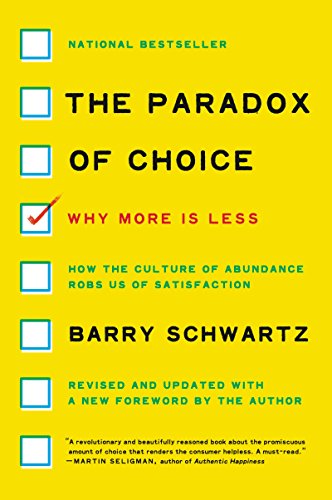
Modern life presents us with an overwhelming array of choices in nearly every domain of our existence. From the cereal aisle at the supermarket offering dozens of brands and varieties, to career paths, relationship options, retirement plans, and even the simple decision of what to watch on streaming services, we face more decisions in a single day than our grandparents might have encountered in a month. While conventional wisdom suggests that having more choices leads to greater freedom and satisfaction, a compelling exploration of human psychology and decision-making reveals a profound and counterintuitive truth: an abundance of choice can actually diminish our well-being rather than enhance it.
At the heart of this examination lies a revolutionary insight that challenges one of the fundamental assumptions of modern Western society. Rather than liberating us, excessive choice often paralyzes us, leading to anxiety, dissatisfaction, and even depression. When faced with too many options, people experience decision fatigue, become overwhelmed by the fear of making the wrong choice, and ultimately feel less satisfied with whatever decision they make. This occurs because with numerous alternatives comes the nagging suspicion that somewhere among all those options lies a perfect choice, and anything less than perfection feels like failure.
Readers discover a framework for understanding two distinct approaches to decision-making that profoundly shape life satisfaction. Maximizers are those who exhaustively search for the absolute best option in every situation, comparing endless alternatives and agonizing over decisions both large and small. Satisficers, by contrast, establish clear criteria for what constitutes "good enough" and select the first option that meets those standards. Through compelling research and real-world examples, it becomes clear that satisficers consistently report higher levels of happiness, optimism, and life satisfaction, while maximizers, despite often making objectively better choices, experience more stress, regret, and disappointment.
Read more ▼
Julia Cameron, Ada Arbós Bo

The Red-Haired Girl from the Bog
Patricia Monaghan

Michelle Schoffro Cook
The quest for happiness often leads to frustration, as many fail to realize that the...

Reaching sixty can evoke complex emotions, blending relief with ongoing ambition. This...

The quest for life's purpose often leads to unsatisfactory answers. This article...

Romantic love is a complex emotion shaped by historical, cultural, and biological...

Imagine going through one of the most physically and emotionally demanding experiences...

Daily actions often conflict with personal beliefs due to past experiences. By utilizing...

Have you ever argued over something that wasn't actually said? From cultural differences...

Therapists often use dream interpretation to delve into patients' emotions, but true...